Last updated November 22, 2026
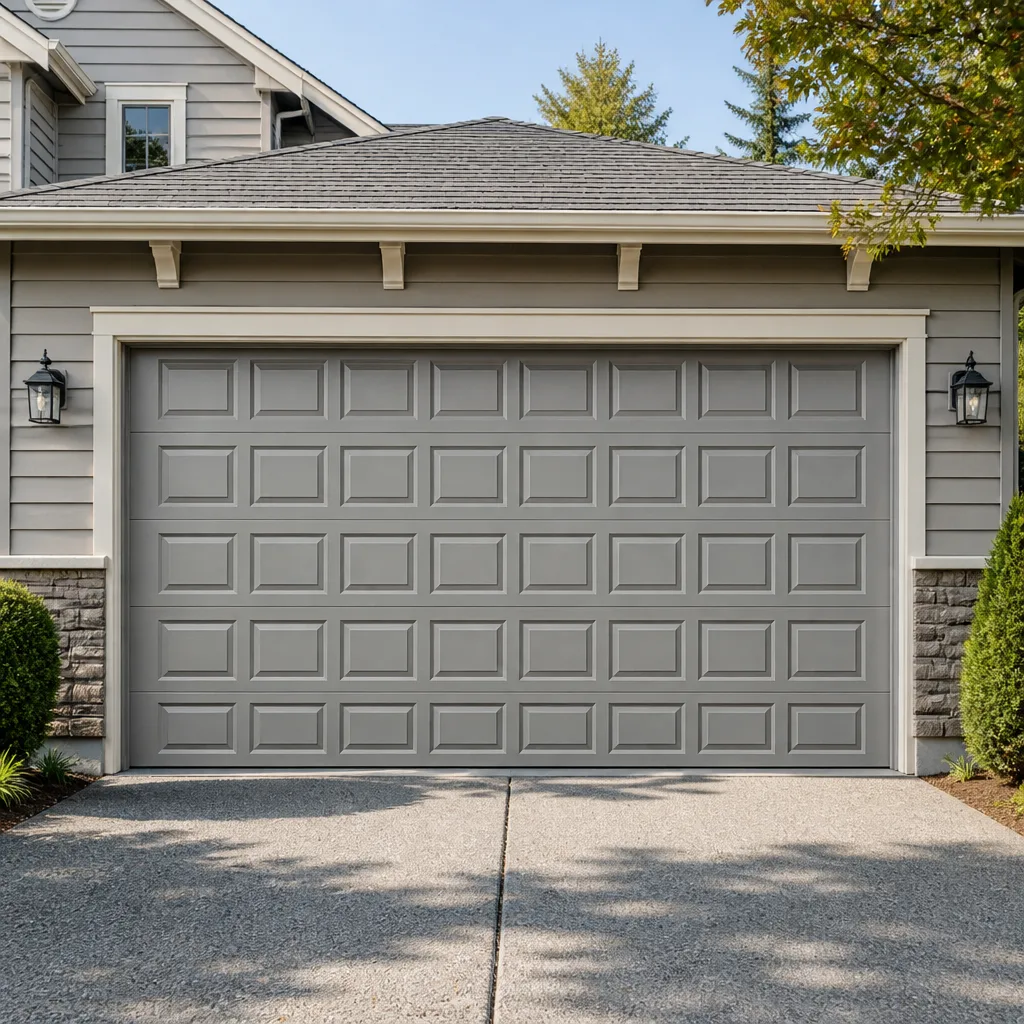 Raised-panel steel
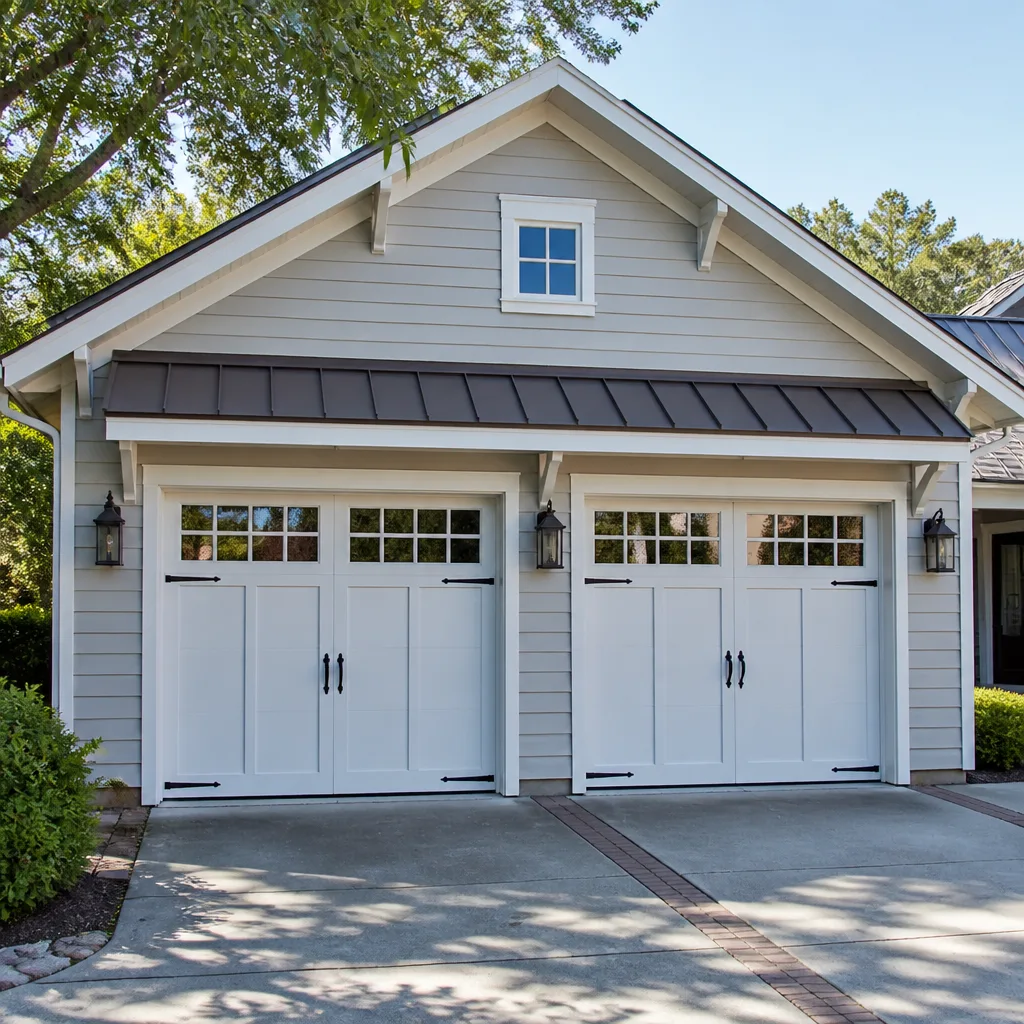 Carriage house
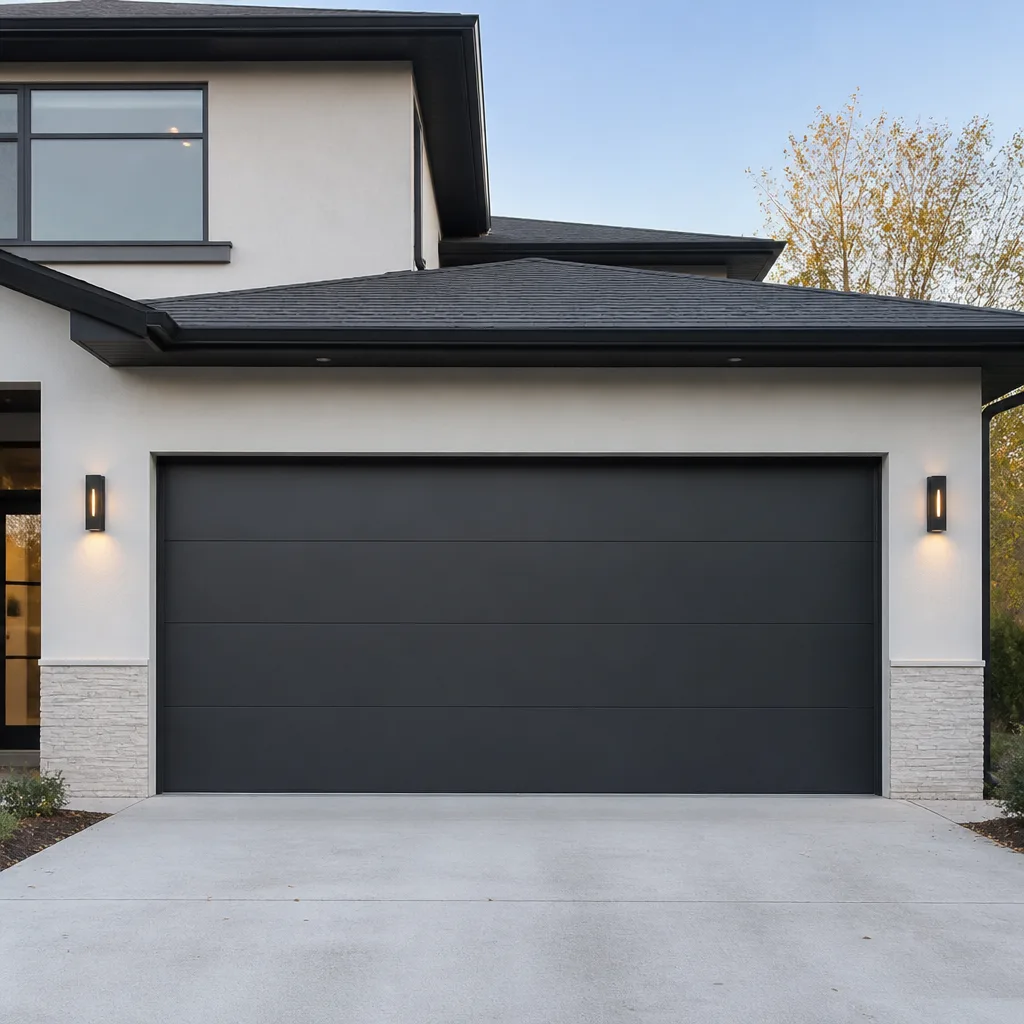 Modern flush
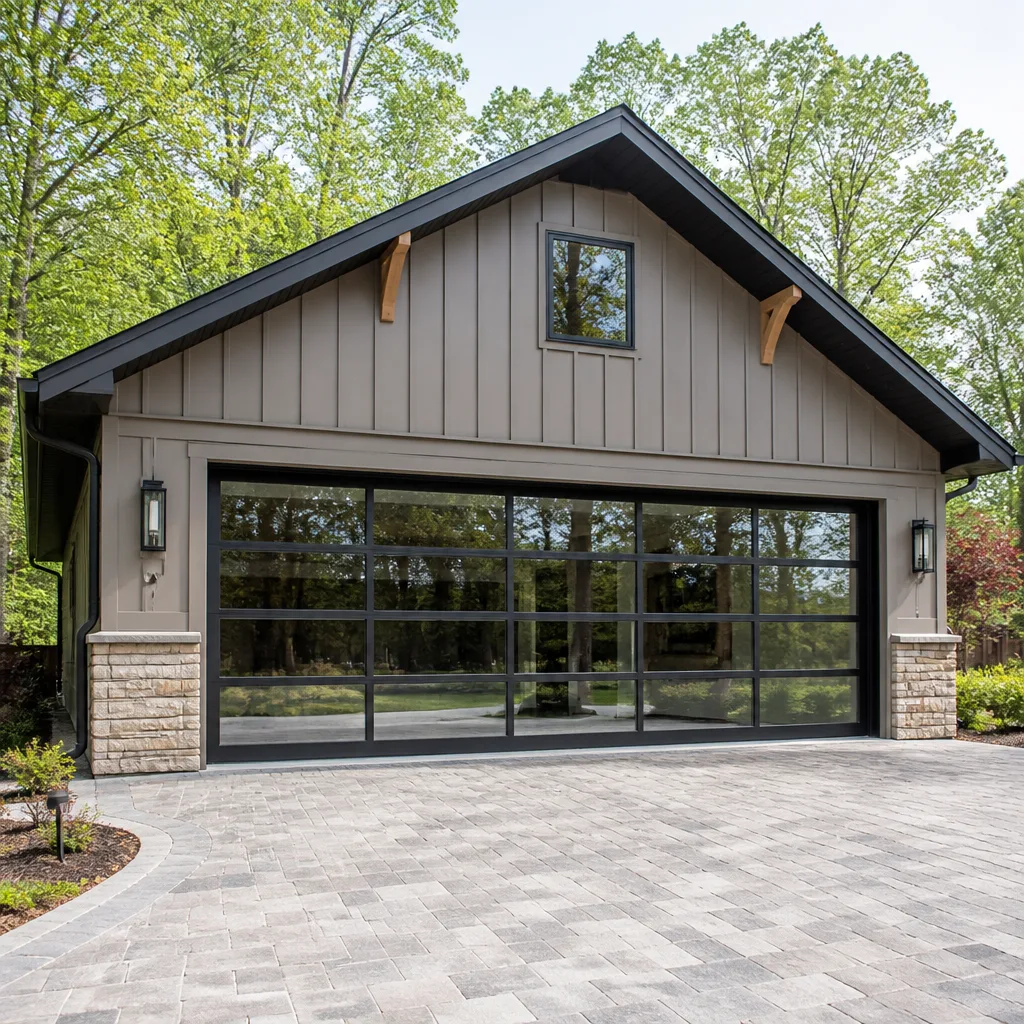 Full-view glass
 LiftMaster openers
 Chamberlain openers
Full 25-point door and opener safety check with every visit - springs, cables, rollers, tracks, and your LiftMaster or Chamberlain opener included
You get a price before we start. It does not change when the pro arrives.
Get your free estimateGarage Door Permits, Codes & Inspections in South Fulton, GA: What You Need to Know
Most South Fulton homeowners assume a garage door swap is too simple to need a permit. A like-for-like replacement usually doesn’t. But the moment structural changes or a new opener circuit enter the picture, Fulton County treats the job as construction, not maintenance. Skip that step and the work can sit on your property record as unpermitted – something an insurer can factor into a future storm damage claim, and something a buyer’s inspector will flag long before closing. This guide lays out exactly which garage door projects in South Fulton trigger a permit, what the inspection checks, how HOA approval differs from county approval, and how to confirm your contractor pulled the right paperwork before anyone touches a track.
Quick Answer
In South Fulton, most garage door permits are required when the job changes the building’s structure or electrical system: a new door opening, a modified structural header, or a new 240-volt opener circuit. A straight like-for-like replacement of the same size door, in the same opening, with no framing changes, typically does not need a permit. When in doubt, call the City of South Fulton or Fulton County building department directly, because the final word on your address always comes from the authority having jurisdiction, not from a guide.
Styles & brands we work with
- Raised-panel steel
- Carriage house
- Modern flush
- Full-view glass
- LiftMaster openers
- Chamberlain openers
Table of Contents
- When does a garage door project need a permit in South Fulton?
- What usually does not need a permit
- What a Fulton County garage door inspection actually checks
- How long the permit process takes, from application to sign-off
- HOA approval vs. county permitting: two separate processes
- What happens to your insurance when unpermitted work is discovered
- How to verify your contractor pulled the permit
- The code points that come up most on South Fulton doors
When does a garage door project need a permit in South Fulton?
South Fulton sits within Fulton County, and garage door permitting here follows the county’s building code framework. The code isn’t really about the door. It’s about three things: the structure that holds the door, the electrical circuit that powers it, and the safety devices that protect people from it. If your project touches any of those three, expect a permit. If it touches none of them, you’re usually in clear water.
The three triggers that bring permitting into play
- New door openings. Cutting a new opening into an exterior wall, or enlarging an existing one, changes the load path of the wall. That’s structural work, and structural work needs plans, a permit, and an inspection. This comes up most often when homeowners convert a carport into an enclosed garage or widen a single-bay opening for a double door.
- Header modifications. The header is the horizontal beam above your opening. It carries the weight of the wall and roof above the door. Replacing a header, adding a post to support a longer span, or repairing rot in the framing around the opening all fall under structural alteration. Even when the door size stays the same, if you’re cutting into the header you’re in permit territory.
- New 240-volt opener circuits. Most residential garage door openers run on a standard 120-volt circuit, and swapping an opener on an existing outlet is usually not a permitting event. But a new 240-volt circuit – sometimes needed for heavier commercial-grade openers or for a dedicated circuit run from the panel – is electrical work that requires a permit and an electrical inspection. Adding any new circuit from the breaker panel, 120 or 240, typically pulls in the electrical code requirements too.
The important thing to understand is that these triggers are defined by the work, not by the door. Two South Fulton neighbors can have identical-looking houses, and one may need a permit while the other doesn’t, purely because one is replacing a door in an existing opening and the other is reframing that opening to fit a wider model.
Why Fulton County draws the line where it does
Garage doors are the largest moving object on most homes. When a header is undersized or a track is anchored into framing that’s been altered without inspection, the failure mode isn’t cosmetic – it’s the whole door coming down. The permit and inspection process exists to catch those structural shortcuts before they’re buried behind drywall and siding. Electrical permitting is there because an improperly wired opener circuit is a fire risk, and because openers need to be powered in a way that lets the safety reverse function work correctly. The county’s code isn’t trying to slow down a simple door swap. It’s separating maintenance from construction, and treating the second one with the scrutiny it deserves.
What usually does not need a permit
Here’s the relief valve: most garage door work in South Fulton homes is replacement and repair, not construction, and the bulk of that does not require a permit. The typical call we get – a broken spring, a door that won’t close, a dead opener – is a maintenance and repair scenario that gets handled without a trip to the county.
Work that is typically permit-exempt
- Like-for-like door replacement. Same size door, same opening, same track configuration, no framing changes. This is the most common garage door project in South Fulton and it almost never needs a permit.
- Spring replacement. Torsion and extension spring swaps are mechanical repair, not construction. They don’t touch the structure or the electrical system. That said, springs are the most dangerous component in the entire assembly and we don’t recommend homeowners attempt them – more on that below.
- Opener replacement on an existing circuit. If there’s already a working outlet or dedicated circuit in the ceiling and you’re swapping one opener for another, no permit is typically involved. This is where brand knowledge pays off, because a LiftMaster, Chamberlain, Genie, or Craftsman unit can each have different wiring and safety sensor expectations, and getting the replacement right matters more than the paperwork.
- Panel, roller, hinge, and cable replacement. These are component-level repairs that don’t change the door’s structure or its electrical supply.
- Track adjustment and realignment. Straightening or re-anchoring a track in its existing position is repair work.
Where the exemption ends
The exemption holds as long as you stay inside the existing opening and the existing electrical setup. The moment a contractor proposes cutting the header, adding a support post, changing the door’s rough opening dimensions, or running a new circuit from the panel, you’ve crossed out of repair and into permitted work. Ask the question explicitly before work starts: “Does this project change the opening or add a circuit?” If the answer is yes to either, the next question is whether a permit is being pulled.
What a Fulton County garage door inspection actually checks
A permitted garage door project ends with an inspection, and homeowners often don’t know what the inspector is looking at. It’s not a cosmetic walk-through. The inspector is verifying that the structural and electrical work matches what was permitted and that the safety systems function.
What the inspection covers
- Header and framing. The inspector confirms the header is sized and installed to the permitted plan, that any new posts or supports are in place, and that the opening dimensions match the approved drawings.
- Attachment and anchoring. Track brackets, spring anchors, and the door’s connection to the framing are checked for proper fastening. A door that’s anchored into unreinforced framing will fail here.
- Balance and operation. The door should travel smoothly, stay balanced at mid-height, and not bind. If the door is out of balance or the springs are wrong for the door’s weight, it shows up during the operation check.
- Safety reverse function. The opener’s safety reverse – the feature that sends the door back up when it meets an obstruction – must be working. If the opener is part of the permitted scope, this gets tested directly.
- Electrical (when a circuit was permitted). A separate electrical inspection verifies the new circuit is properly wired, grounded, and protected at the panel.
The structural and electrical inspections are usually separate sign-offs, and you’ll often need both before the job is considered closed. If your project only involved a structural change and no new circuit, the electrical inspection may not apply at all. Confirm with the county which inspections your specific permit requires, because the answer depends on the scope you filed.
How a failed inspection usually gets fixed
Failed inspections are rarely dramatic. Most come down to a missing fastener, an undersized anchor, an unbalanced door, or an opener safety reverse that wasn’t set. The contractor corrects the issue and the inspection is re-scheduled. What you want to avoid is a contractor who disappears after the job and leaves the permit open – an unclosed permit is exactly the kind of loose end that surfaces later during a sale or a claim. Any reputable team treats the inspection as part of the job, not an afterthought.
How long the permit process takes, from application to sign-off
There’s no single number that applies to every garage door permit in South Fulton, because the timeline depends on scope, plan review, and inspection scheduling. But the shape of the process is predictable, and knowing the steps helps you plan around the door being out of commission.
The typical permit sequence
- Scope confirmation. You and your contractor agree on exactly what’s permitted: a new opening, a header change, an electrical circuit, or some combination. This determines the application type.
- Application and plan submission. The permit application is filed with the authority having jurisdiction for your address – which in South Fulton can be the City of South Fulton or Fulton County depending on where you sit. Plans are submitted for the structural scope.
- Plan review. The county reviews the drawings against the building code. Reviews can range from a quick turnaround to several weeks, and incomplete plans are the most common cause of delay.
- Permit issuance and work. Once issued, the work can proceed. Many inspections require the structural work to be visible, so don’t let anyone close up the framing before the inspection happens.
- Inspection and sign-off. The inspector visits, checks the work, and signs off. Structural and electrical are usually separate visits.
- Permit closure. The permit is formally closed and the record shows the work as permitted and inspected.
Planning around the door being out of service during a permitted project
A permitted structural project is a scheduled job. Tracks and framing are opened up, the door may be off for a stretch, and the inspection windows add calendar time. That’s a different animal from a repair call. If your opener dies or a spring snaps on a door you use every day, we can usually get a technician out quickly and solve it without permitting. If you’re planning a conversion or a widening project, budget for the permitting calendar and treat the door as temporarily unavailable. For everyday repair and emergency situations, our garage door repair team handles the urgent end of the spectrum.
HOA approval vs. county permitting: two separate processes
This is where a lot of South Fulton homeowners get tripped up. HOA approval and county permitting are two entirely different gates, run by two entirely different bodies, and clearing one does not clear the other. A common mistake is assuming that because your HOA approved the new door, the county paperwork is a formality – or the reverse, that because the county issued a permit, your HOA is fine with the color and style.
How the two processes differ
- What they govern. The county governs structure, electrical, and safety code compliance. Your HOA governs appearance, materials, color, and neighborhood consistency.
- Who decides. The county is the authority having jurisdiction, with an inspector and a sign-off. The HOA is a private body governed by its covenants, with an architectural review committee in many South Fulton communities.
- What can go wrong. A door that meets every code requirement can still violate HOA covenants if it’s the wrong color or style. And an HOA-approved door can still need a county permit if the opening is being changed.
- What gets recorded. County permits leave a public record. HOA approvals leave a private record. Only one of them shows up when someone pulls your property file.
Which one to start first
Start with the HOA, then the county. The logic is simple: HOA design approval constrains what door you can install – color, panel style, window configuration – and that decision comes before you finalize plans or order anything. The county permit is about how the opening is built and powered, and it needs the final door specs to be complete. Get the design locked by the HOA first, then file the permit with the county using those specs. Doing it in the other order often means paying for a permit revision because the HOA asked for a different door type after your plans were already reviewed.
If your HOA review and county submission are running in parallel, keep both review committees informed of the other’s timeline. In practice, the delay is almost always one side waiting on a decision from the other, and a single phone call to reconcile the schedules prevents most of that.
What happens to your insurance when unpermitted work is discovered
Homeowners insurance covers sudden, accidental damage. It does not cover defective work, and it can be affected by unpermitted work discovered during a claim. If your storm damage claim involves a garage opening that was modified without a permit, the insurer may exclude the affected portion of the claim or ask for proof that the work was permitted and inspected before paying on that structure. That’s the scenario that matters most here – not a fabricated incident, but the mechanism itself.
The mechanism, step by step
- You file a claim involving your garage door or opening – storm impact, a fallen tree, that kind of loss.
- The adjuster inspects the damaged area and pulls the property record, including permit history.
- If the record shows a structural modification was made without a permit, or a permit was opened and never closed, the insurer flags the affected structure.
- The claim on that structure can be reduced or denied, because the insurer can’t verify the pre-loss condition was code-compliant.
- You’re left covering the gap, plus the cost of retroactively permitting and possibly correcting the work.
That’s the real reason to care about the permit question. It’s not that a missing permit on its own invalidates your whole policy. It’s that the paperwork on your garage opening can matter the moment you need your insurer. And retroactive permitting is always more expensive and more disruptive than pulling the permit at the start, because the work may already be closed up and hidden. When a claim is in play, we can help sort out what’s structural and what’s a repair – our South Fulton Garage Door Repair team works through both sides.
What to do before a claim ever comes up
Pull your property’s permit history now, not after a storm. If a previous owner had work done and you can’t find a record, ask the county. If a permit was opened and never closed, you can typically arrange an inspection to close it. Getting a clean record on your garage opening is one of the least glamorous, most valuable things you can do as a homeowner, and it takes one phone call to start.
How to verify your contractor pulled the permit
Pulling a permit isn’t a promise your contractor makes – it’s a public record you can check yourself, before work starts. This is the single most useful habit for any South Fulton homeowner planning permitted garage door work. If a contractor tells you they’ve pulled the permit, you can verify it in minutes, and if they resist giving you the number, that’s the moment to slow down.
Step-by-step verification
- Ask for the permit number before work begins. A contractor who pulled a permit can give you the number on day one. “We’ll pull it later” is a red flag once work is scheduled.
- Look it up on the county’s online permit portal. The City of South Fulton and Fulton County both maintain online permit records. Search by your address, the permit number, or the contractor’s name.
- Confirm the scope matches the job. The permit record should describe the work you’re actually getting: a new door opening, a header modification, an electrical circuit. If the scope on the permit doesn’t match the work being scheduled, ask why.
- Confirm the permit is issued, not just applied for. An application sitting in review is not a permit. Work shouldn’t start until the permit is issued.
- Check the inspections. After the work, look up whether the required inspections were requested and passed, and whether the permit was closed.
If you don’t want to navigate the portal yourself, call the building department and ask them to confirm the status of the permit on your address. The county is used to this call and it takes a few minutes. A contractor who’s confident in their paperwork won’t mind you checking; the ones who bristle are telling you something.
What to look for when choosing who does the work
When you’re evaluating garage door companies for a South Fulton project, ask two questions up front: “Will this specific project require a permit?” and “If it does, will you pull it in your name?” A contractor who knows the local code will give you a straight answer on both, and they won’t guess. Our technicians have up to 14 years of experience, and the ones who’ve worked the most jobs in this county are the ones who can tell you exactly why a header change needs a permit and a color change doesn’t. For the repair end of the work, our garage door opener repair service handles the electrical and mechanical side without the permitting overhead, because most opener and spring failures aren’t construction events.
The code points that come up most on South Fulton doors
Permits aside, a few code and safety points come up over and over on South Fulton garage doors. These are the things an inspector will check, and they’re also the things that cause real injury when they’re wrong. We’re listing them so you know what to ask about, not so you’ll attempt them yourself.
Safety reverse: the one that saves lives
Every residential opener is required to reverse when it meets an obstruction. It’s tested by placing a solid object in the door’s path and confirming the door returns to open. The function is only as good as its sensors, and sensors can drift out of alignment or fail without any visible warning. This is one of the first things an inspector tests, and it’s something any homeowner can ask a technician to verify during a routine service call. If your door doesn’t reverse reliably, don’t use it and call someone.
Springs and the safety cable
Extension springs are required to be contained by a safety cable that runs through the spring and prevents it from flying across the garage if it breaks. Torsion springs don’t use that same cable arrangement but carry more stored force and fail differently. Either way, this is the highest-risk component in the system, and it’s the one thing on a garage door we tell every homeowner not to touch. Replacements and repairs are straightforward for a trained technician and genuinely dangerous for a homeowner. If a spring has failed or you hear a loud snap from the garage, call us for garage door spring repair rather than attempting it yourself.
Balance, travel, and force settings
A door that isn’t balanced puts strain on the opener and makes the safety reverse harder to tune. Force limits on newer openers need to be set to match the door’s weight. These aren’t typically permit items on their own, but they show up during an inspection if an opener installation is part of the permitted scope, and they matter for safe operation on every door. On a LiftMaster or Chamberlain, the force settings and travel limits are set differently than on a Genie unit, and a technician who works across brands adjusts the correct parameter rather than guessing.
Electrical clearance and panel access
If a new opener circuit is part of the project, the inspector checks the panel for adequate capacity, proper grounding, and safe routing of the new circuit. An overloaded panel is a fire risk, and adding an opener circuit to a panel with no open slots or insufficient capacity is one of the situations where the electrical permit process earns its keep. A licensed electrician should handle the circuit itself; we can coordinate the mechanical side with the electrical work.
Common Mistakes to Avoid
- Assuming every door replacement needs a permit. Like-for-like replacement in the same opening usually doesn’t. Over-permitting wastes money and time; a contractor who insists every swap needs county approval either doesn’t know the code or is padding the bill.
- Assuming no garage door project ever needs one. New openings, header modifications, and new 240-volt opener circuits all do. This is the more expensive mistake of the two when it surfaces later.
- Getting county approval before HOA design approval. HOA rules may force a different door style or color, and if that happens after your plans are reviewed, you’re paying for a permit revision. Lock the design with the HOA first.
- Letting work start before the permit is issued. An application in review is not a permit. If work begins on an unissued permit, the inspection can fail on that basis alone and the whole process restarts.
- Never checking the permit status yourself. Contractors who say “we pulled it” and then can’t produce a number are telling you something. The county portal is public; use it.
- Closing up framing before the structural inspection. If the inspector needs to see the header or the anchoring, drywall and siding have to come back off. Scheduling inspections before finish work prevents that.
- Attempting spring work yourself. A failed torsion or extension spring stores enough force to cause serious injury. It’s the most dangerous component in the system and the one that should always go to a trained technician, no matter what a video suggests.
See the difference
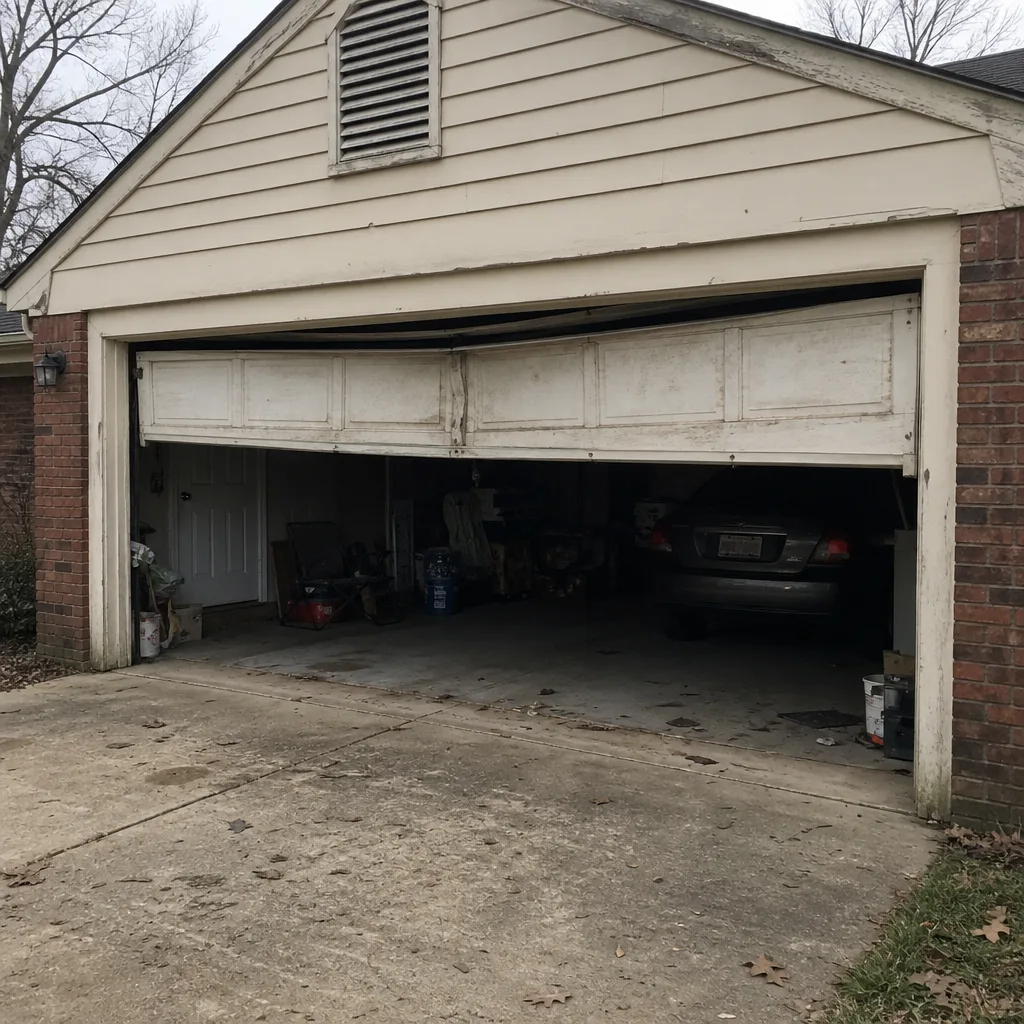 Before
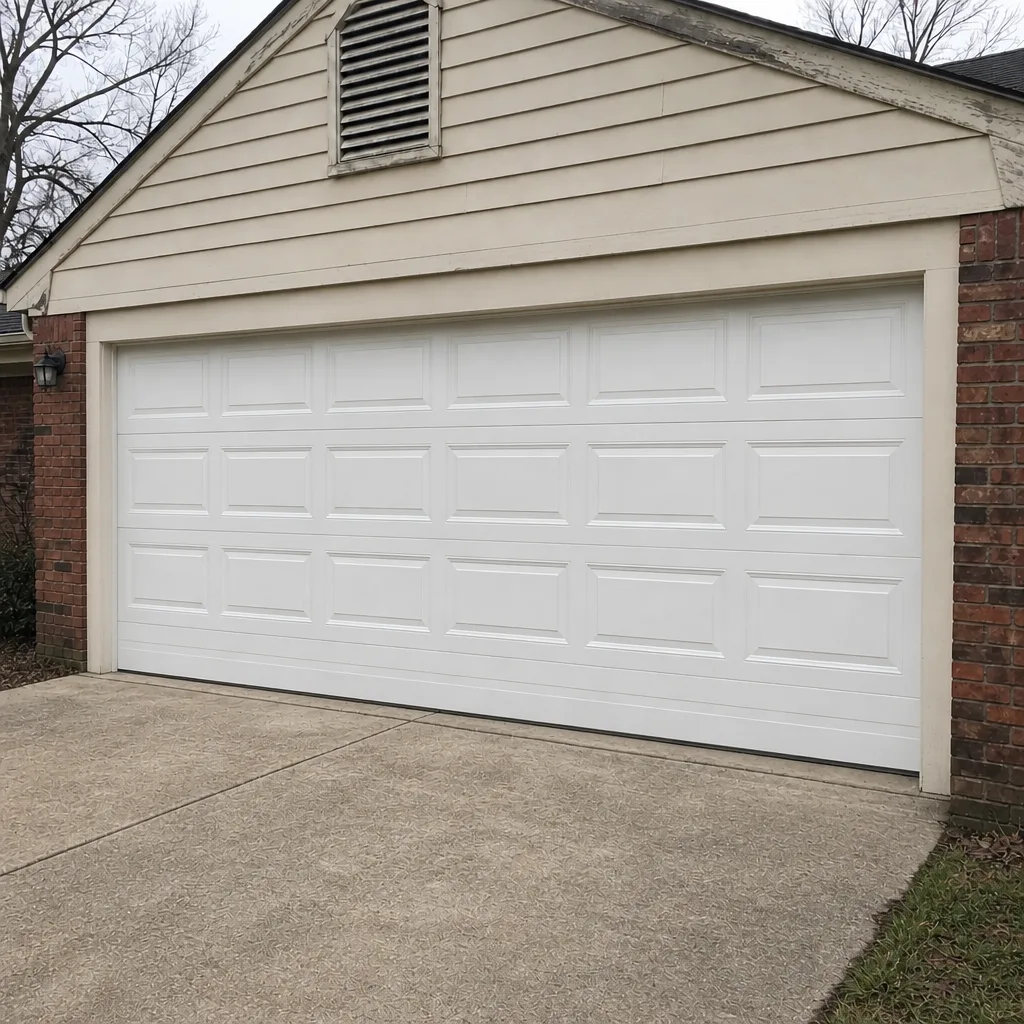 After
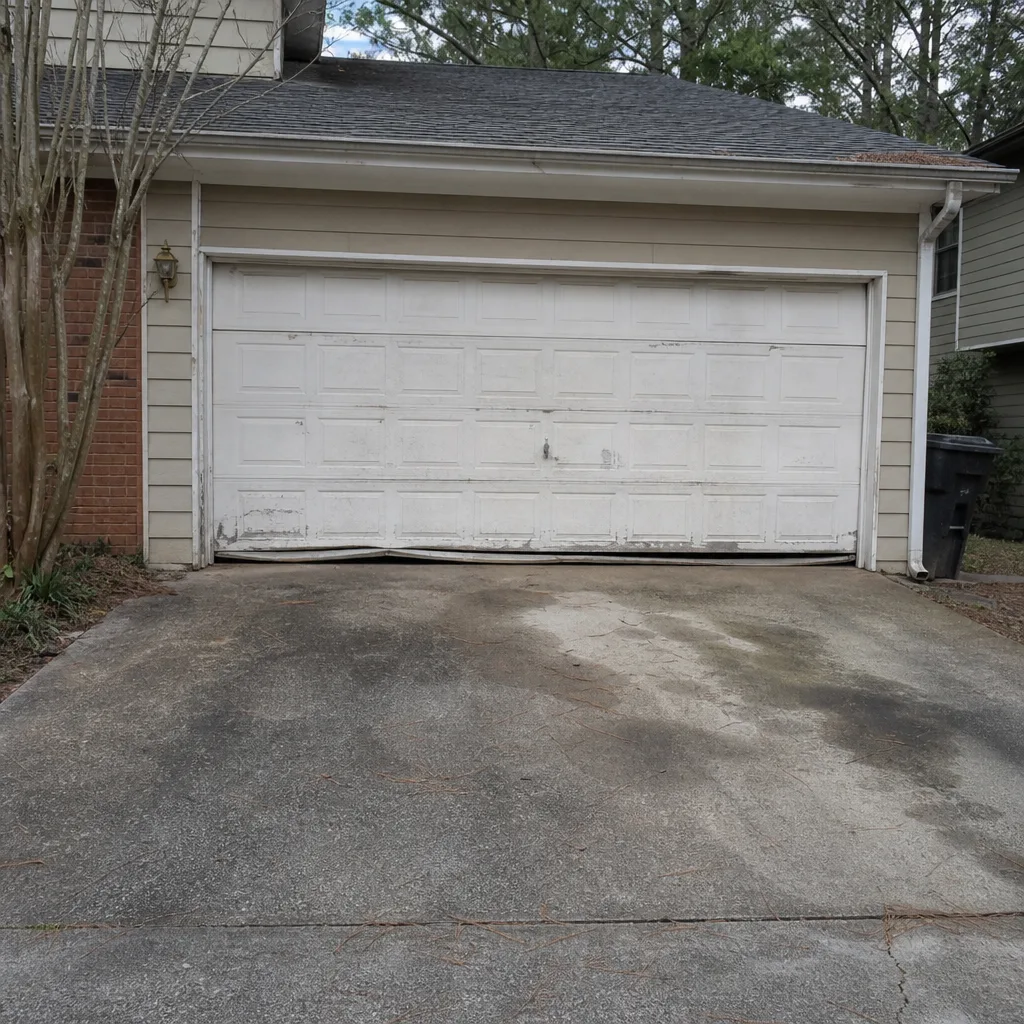 Before
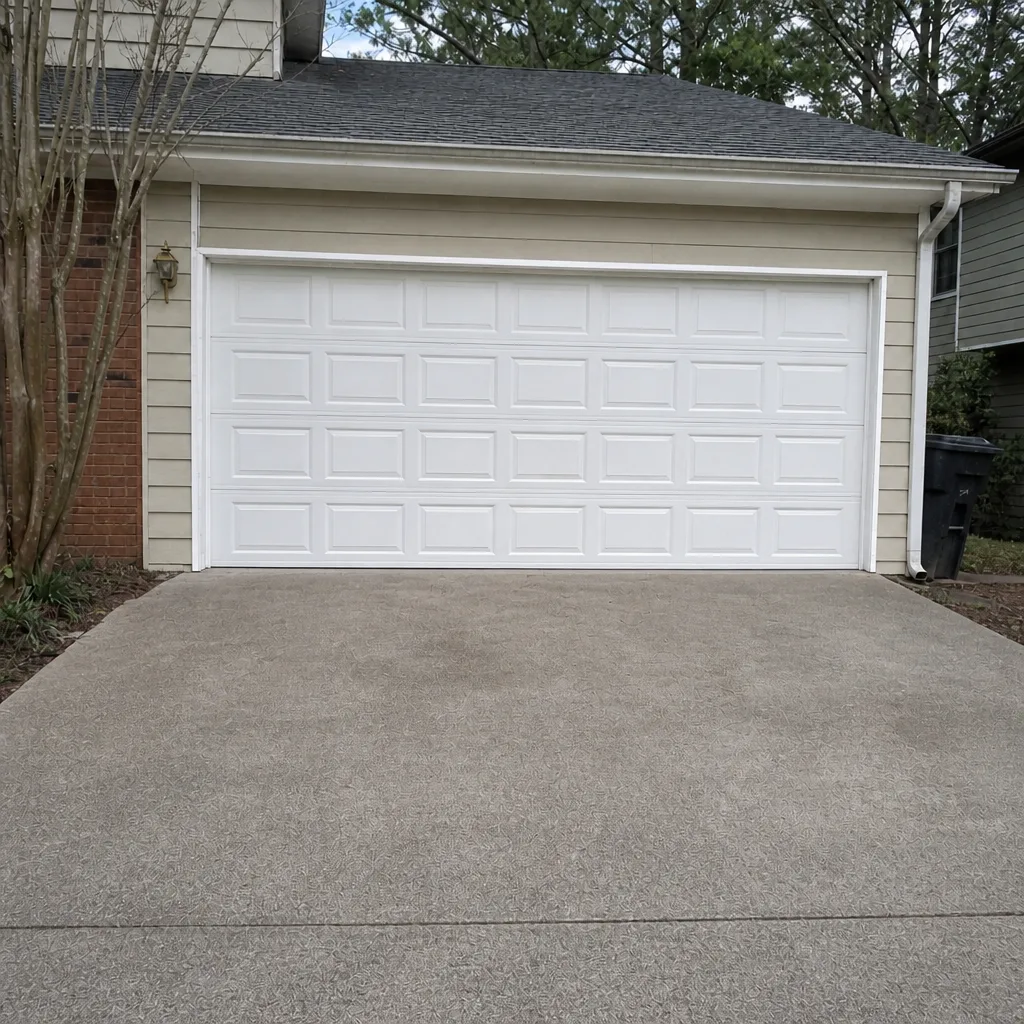 After
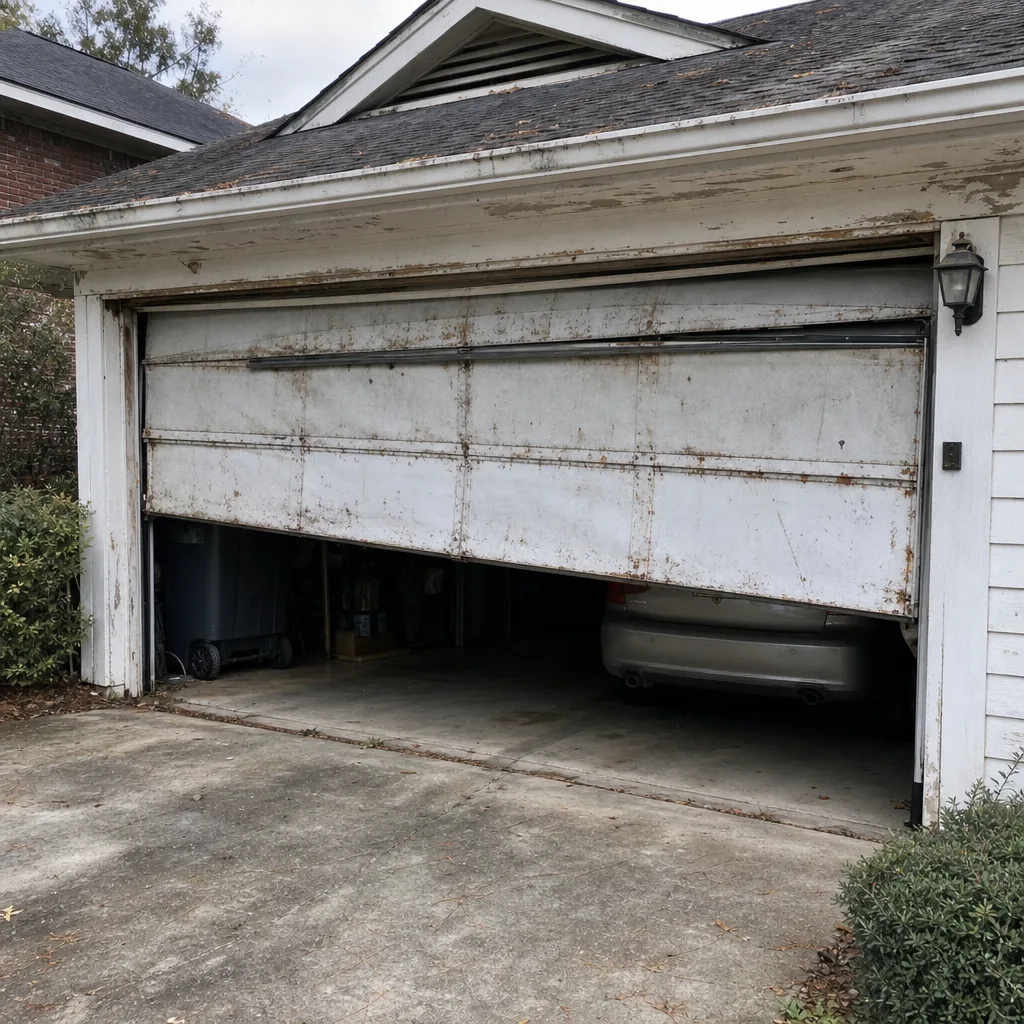 Before
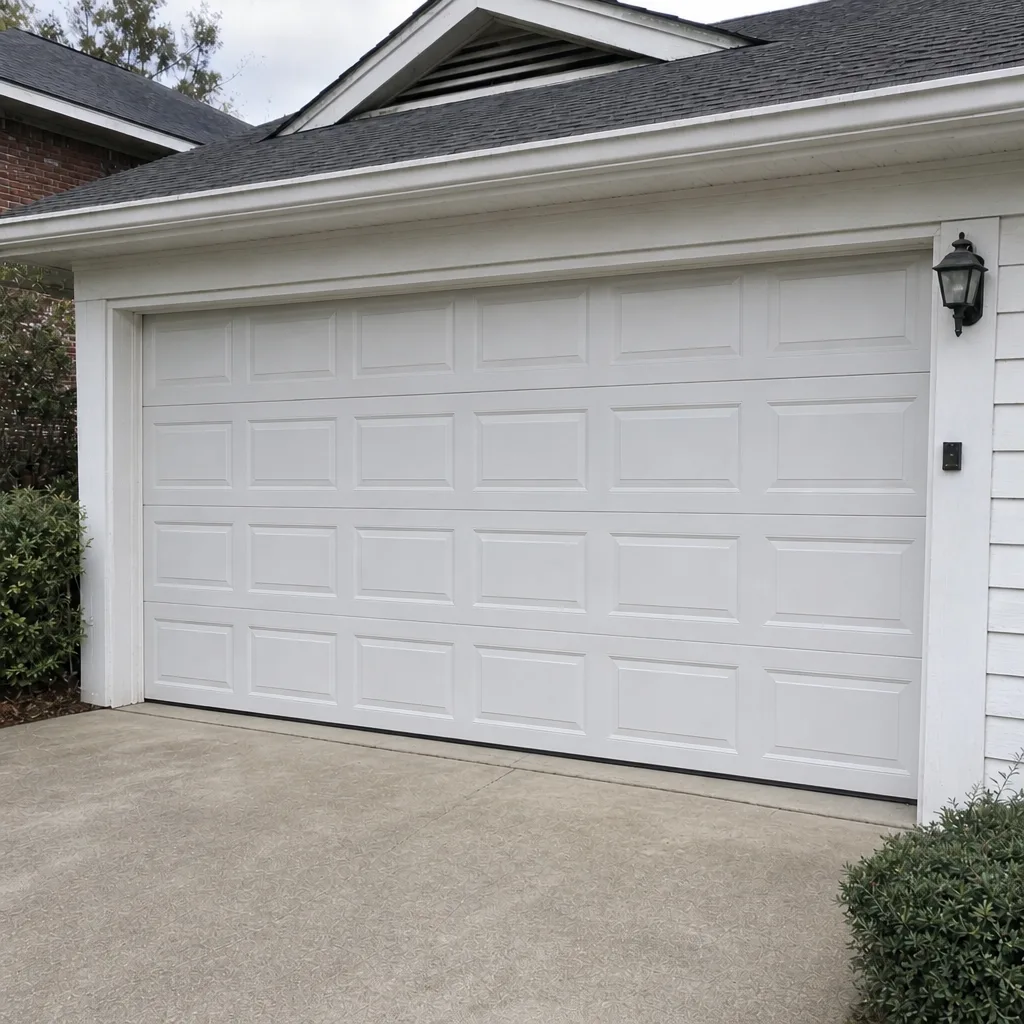 After
When to Call a Professional
Call a professional when a spring snaps, when the door won’t close or reverses unpredictably, when the door is visibly off its track, when the opener is dead or making grinding sounds, and whenever a project changes the opening or the electrical circuit. Those last two are the permit-triggering scenarios, and the first four are the safety and repair scenarios. Trying to sort out which is which from a video is how homeowners end up with an invoice that’s larger than it needed to be. We work on LiftMaster, Chamberlain, Genie, Clopay, Amarr, Wayne Dalton, Craftsman, and Raynor equipment, so you won’t hit a “we don’t work on that brand” wall, and our emergency service is a core capability rather than an afterthought. South Fulton Garage Door Repair offers free estimates in South Fulton – call (855) 765-9962.
Frequently Asked Questions
Usually no, if it’s a like-for-like replacement of the same size door in the same opening with no framing or electrical changes. You generally do need one if the project creates a new door opening, modifies the structural header, or adds a new 240-volt opener circuit. Confirm the specific answer for your address with the City of South Fulton or Fulton County building department – call (855) 765-9962 for a free estimate if you’d like an assessment of what your project involves.
It can. If a structural modification to the opening was made without a permit, or a permit was opened and never closed, an insurer may reduce or exclude the affected portion of a claim involving that structure. The mechanism is the property record: unpermitted work means the insurer can’t verify the pre-loss condition was code-compliant. Getting the paperwork right up front avoids the problem entirely. Call (855) 765-9962 to talk through your situation.
They’re separate processes and they don’t conflict on their own – they just have to both be satisfied. Your HOA governs appearance, materials, and color; the county governs structure, electrical, and safety code. Start with the HOA so the door’s design is locked, then file the county permit using those final specs. Keeping both sides informed of each other’s timelines prevents most delays. For a free estimate on the work itself, call (855) 765-9962.
Yes, and you should. The City of South Fulton and Fulton County both maintain online permit portals. Search by your address, the permit number, or the contractor’s name, and confirm the permit is issued, that the scope matches your job, and that required inspections were requested and passed. If you’d rather not navigate the portal, the building department will confirm a permit’s status by phone. Call (855) 765-9962 for a free estimate.
Torsion and extension springs store enough force to cause serious injury if they release during handling. That’s why spring work is the one part of a garage door we tell every homeowner not to attempt. Replacement and repair are straightforward for a trained technician and genuinely dangerous for a homeowner. If you hear a loud snap or the door won’t lift, call (855) 765-9962 for spring repair rather than testing it yourself.
A permitted structural or electrical project is a scheduled job, not a same-day fix. Plan review can take days to weeks, and structural and electrical inspections are separate sign-offs, so the calendar includes the permitting timeline. A repair – a spring, an opener, a track – is a different category and can usually be handled the same day. Call (855) 765-9962 for a free estimate and we’ll tell you which category your project falls into.
The Bottom Line
The permit question comes down to scope, not paperwork anxiety. Like-for-like door replacements, spring swaps, opener replacements on existing circuits, and panel repairs are repair work and normally don’t need a county permit in South Fulton. New openings, header modifications, and new 240-volt opener circuits are construction, and they do. Start with the HOA for design, file with the county for structure and electrical, and verify the permit yourself before work starts. A clean permit record protects your insurance claim, your sale, and the safety of the door. Most importantly, leave the springs to a technician – it’s the one part of the system where the risk isn’t worth the savings. Call South Fulton Garage Door Repair for a free estimate at (855) 765-9962.
Written by the team at South Fulton Garage Door Repair.