Last updated November 22, 2026
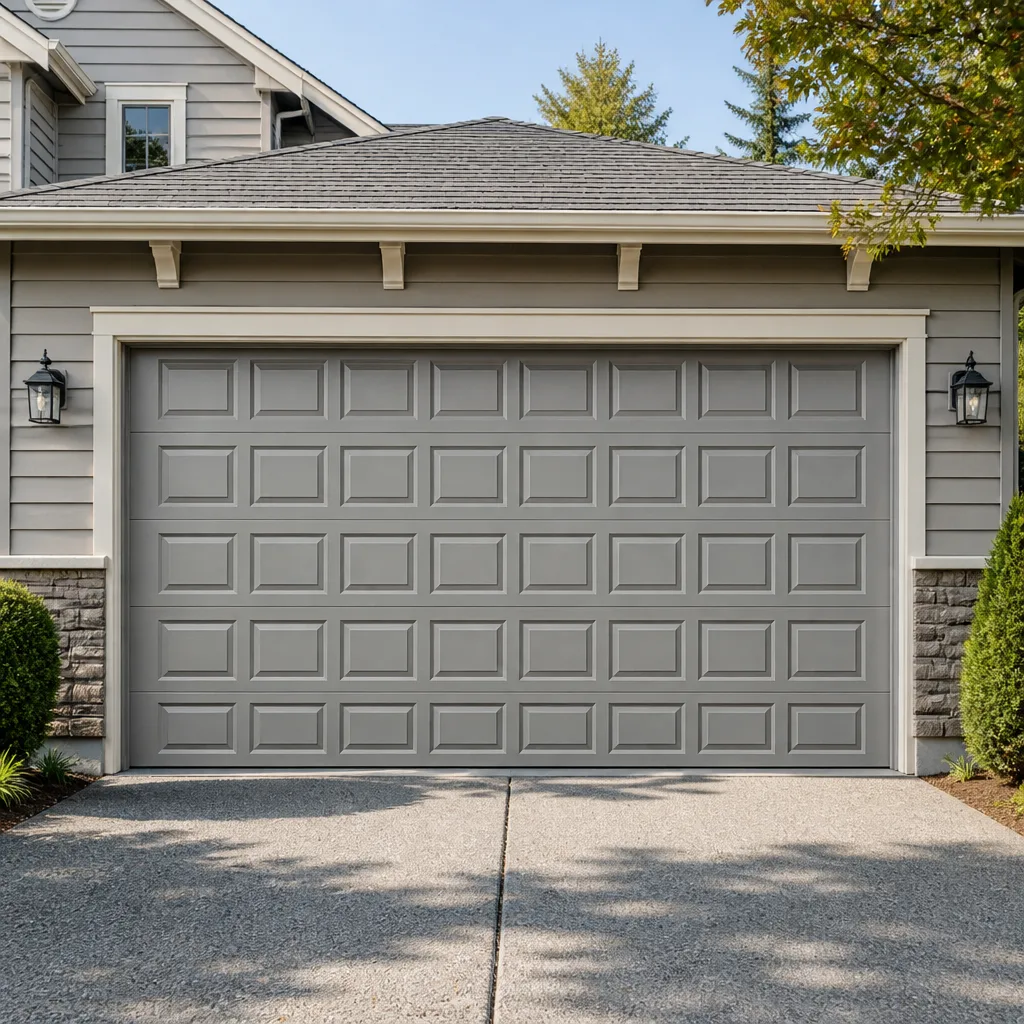 Raised-panel steel
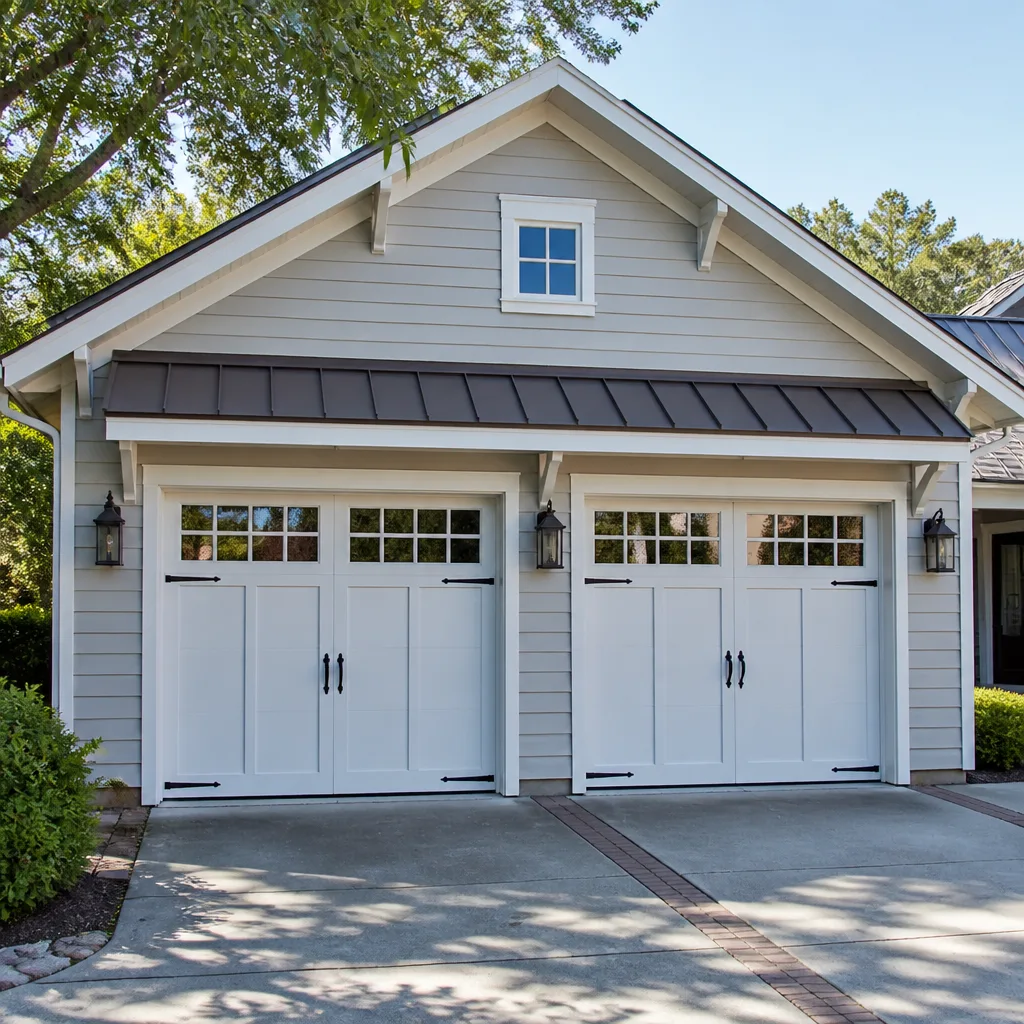 Carriage house
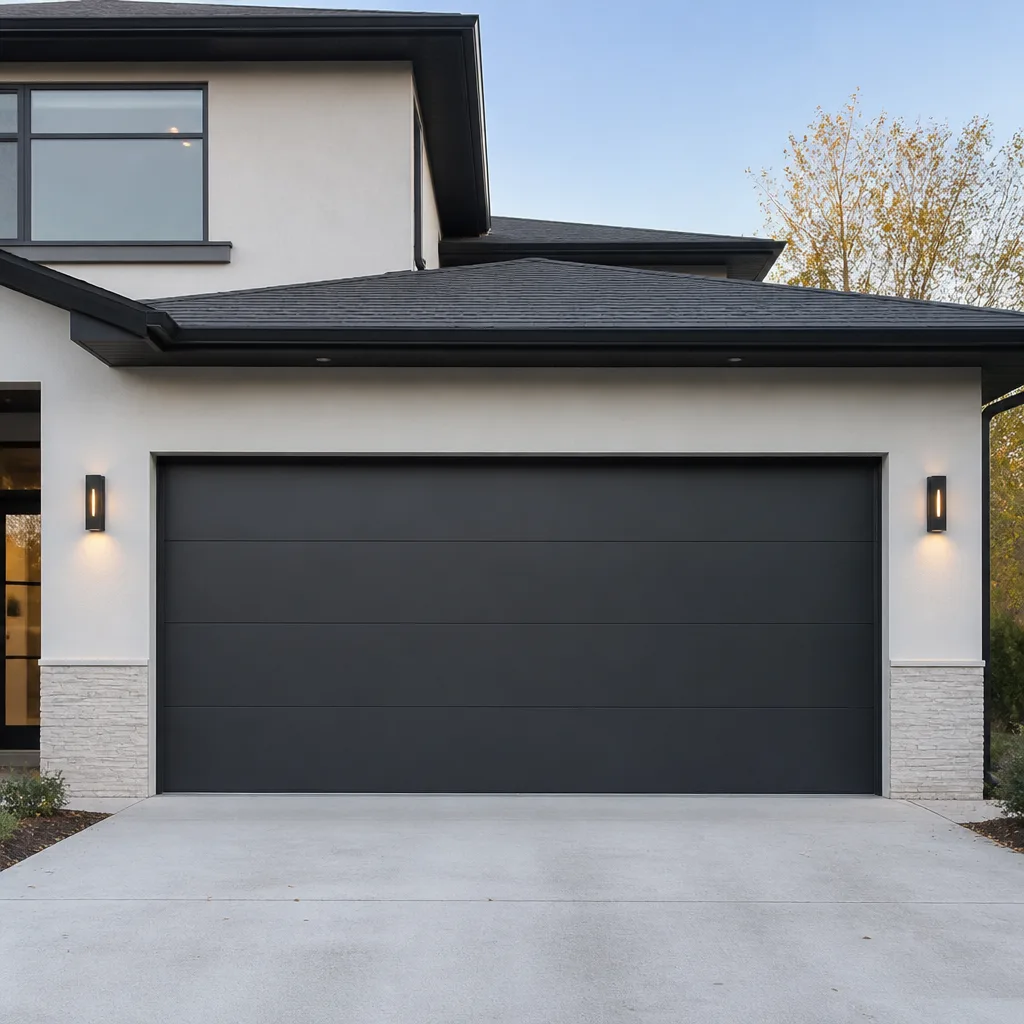 Modern flush
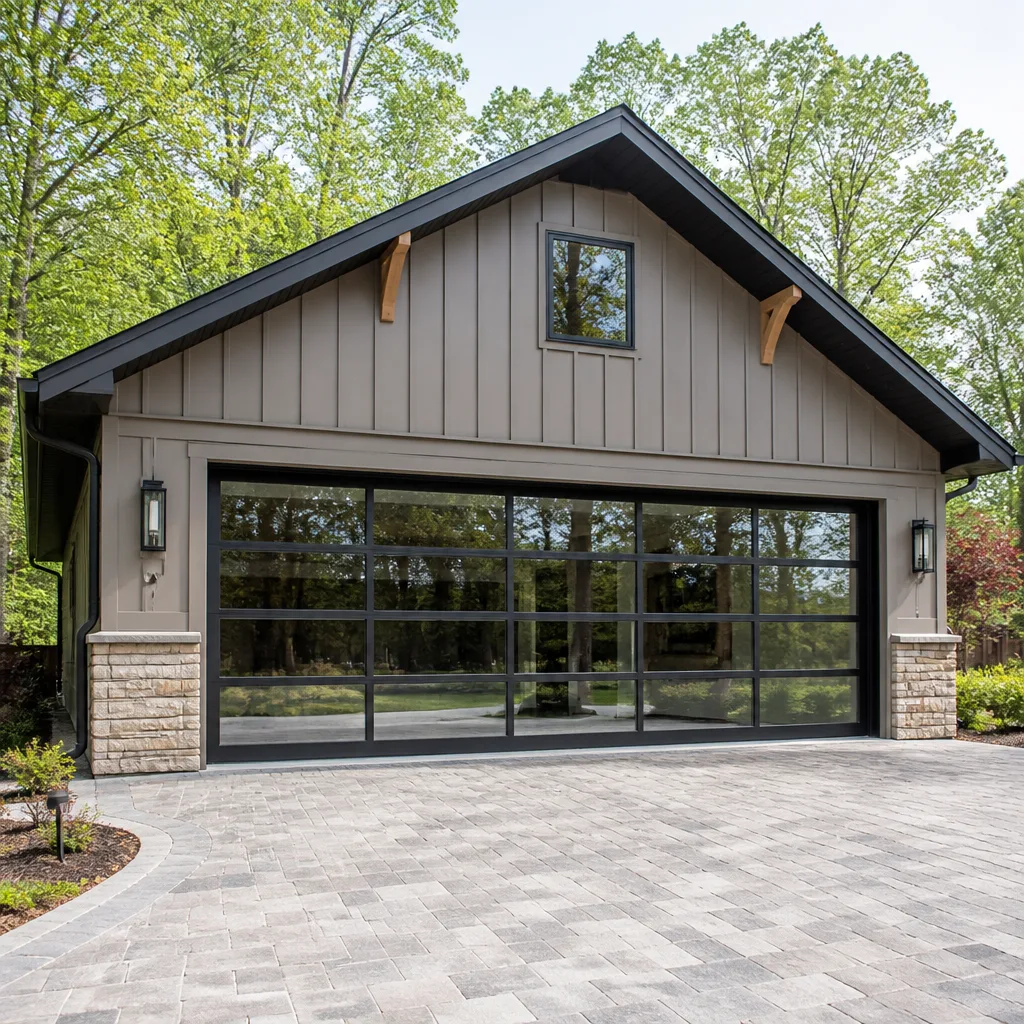 Full-view glass
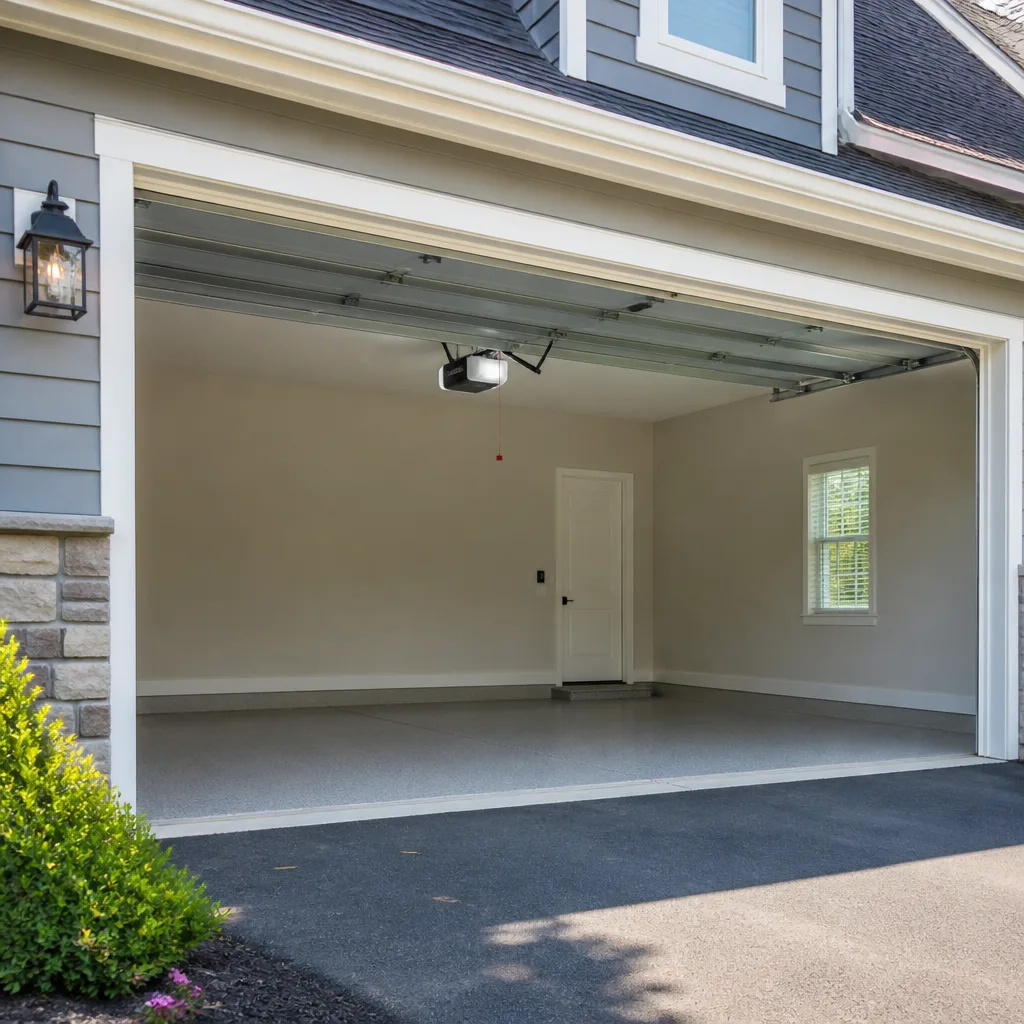 LiftMaster openers
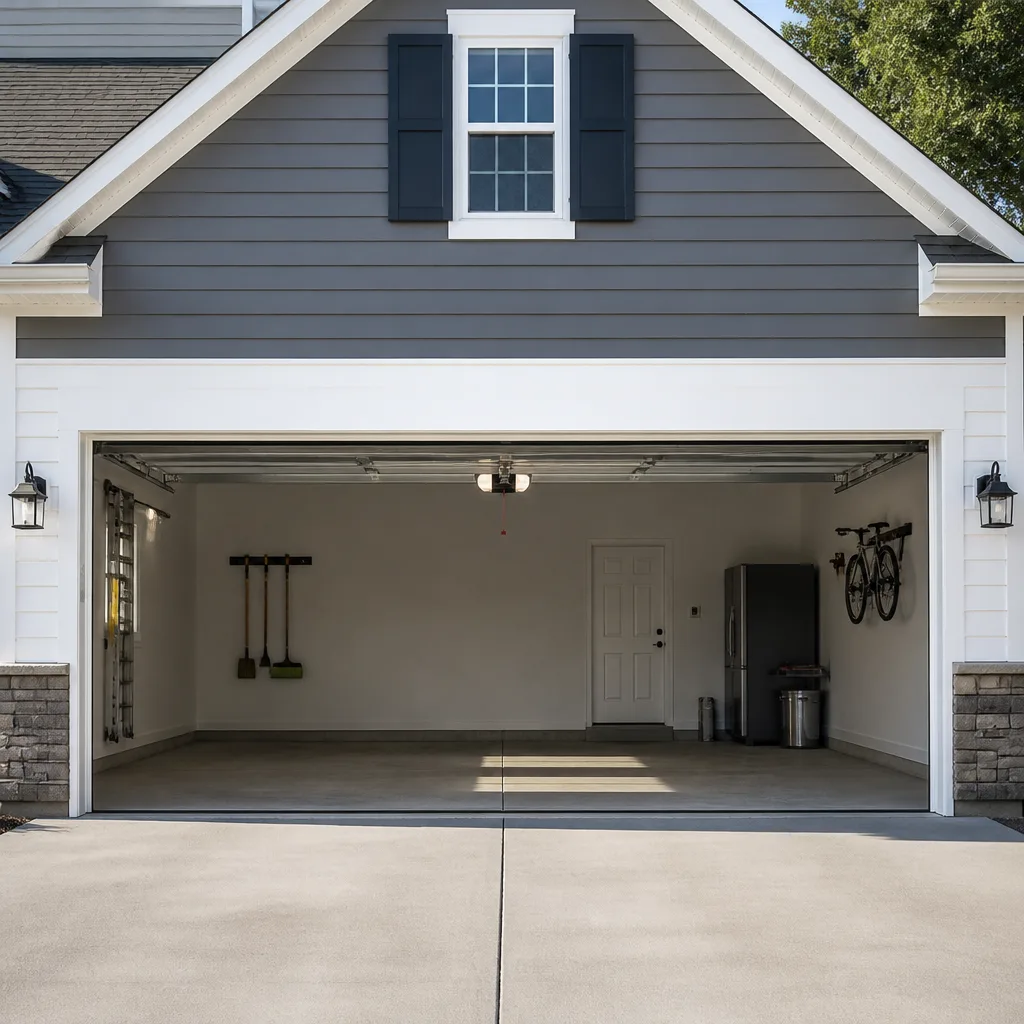 Chamberlain openers
Full 25-point door and opener safety check with every visit - springs, cables, rollers, tracks, and your LiftMaster or Chamberlain opener included
You get a price before we start. It does not change when the pro arrives.
Get your free estimateThe Complete Guide to Garage Doors in South Fulton
Most homeowners spend more time picking out a refrigerator than they do picking a garage door. That’s backwards. The door is the largest moving part of your house, the first thing a storm tests, and the easiest way into your home if something goes wrong. In South Fulton, the decisions you make about that door get shaped by things generic guides never mention: Georgia humidity that punishes cheap steel and swells wood, HOA rules that dictate color and style down to the panel, and lot sizes that put your door front and center for the whole street to see. This guide walks through panel materials, spring types, opener brands, HOA compliance, and permit triggers, all mapped to how things actually work in South Fulton.
Quick Answer
A garage door in South Fulton should be chosen around three local realities: humidity that rusts thin steel and warps wood, HOA rules that control color and panel style, and two-car garages that are best served by torsion springs rather than extension springs. Most homeowners are better off with a well-insulated steel door from a brand like Clopay or Amarr, serviced by a technician who knows that brand, than with a fancier-looking door that fights the climate. Get the material, spring type, and HOA compliance right the first time and you’ll spend far less on repairs over the life of the door.
Styles & brands we work with
- Raised-panel steel
- Carriage house
- Modern flush
- Full-view glass
- LiftMaster openers
- Chamberlain openers
Table of Contents
- Why a Garage Door Guide for South Fulton Looks Different
- Steel, Wood, or Fiberglass: What Georgia Humidity Does to Each
- HOA Rules in South Fulton Subdivisions and How to Stay Compliant
- Torsion vs. Extension Springs for South Fulton Two-Car Garages
- What Separates a $700 Door from a $2,200 Door
- Choosing and Repairing an Opener in South Fulton
- Permit Triggers: When a Door Swap Needs an Inspection
- A Maintenance Routine That Fits Georgia Weather
Why a Garage Door Guide for South Fulton Looks Different
A garage door that’s ideal in Phoenix is often a poor choice in South Fulton, and the reverse is just as true. The advice you find on most big-box retailer sites and national chain pages assumes a climate that doesn’t match ours. Two factors dominate here: moisture, and the swing between a muggy July and a cold January morning.
Georgia humidity is the quiet enemy of a garage door. It works its way into seams, hinges, and the bottom edge of any panel, and it goes after the cheapest coatings first. Combined with temperature swings that expand and contract metal daily, that humidity turns a small paint chip into a rust spot faster than a homeowner expects. Wood doors get the same treatment in reverse: they swell in summer, shrink in winter, and crack along the grain if they aren’t sealed and re-sealed on schedule.
Suburban lot sizes matter too. In most South Fulton subdivisions, the garage faces the street and takes up a big share of the front elevation. That puts the door on display, which is why HOA architectural committees treat it as part of the home’s appearance, not an afterthought. A door that performs fine mechanically can still get you a letter if its color or panel style breaks the covenants.
We work on the brands that show up most often on South Fulton homes and in our repair calls: LiftMaster, Chamberlain, Genie, Clopay, Amarr, Wayne Dalton, Craftsman, and Raynor. Knowing a specific system matters. A technician who’s familiar with a Wayne Dalton torsion setup or a Genie opener’s limits diagnoses faster and recommends the fix that fits, rather than the one that happens to be on the shelf. When a door is acting up, garage door repair starts with identifying the exact system, not guessing at it.
Steel, Wood, or Fiberglass: What Georgia Humidity Does to Each
Panel material decides how much maintenance your door needs over the next decade. In South Fulton, the humidity and temperature swings tilt that calculation toward steel for most homes, but each material has a legitimate place. Here’s how they actually hold up.
Steel
Steel is the dominant choice for a reason. A well-made steel door with a good finish resists moisture better than wood and costs less than either wood or high-end fiberglass. The weak points are the bottom edge, seams, and any scratch that exposes bare metal. Humidity finds those spots, so a periodic touch-up on chips is what keeps a steel door looking new. Heavy-gauge steel panels hold their shape through thermal expansion better than thin ones, which matters in a climate with real seasonal swings.
Wood
Wood doors look great and fit the traditional architecture in some South Fulton neighborhoods. They also demand the most upkeep in our climate. Wood absorbs moisture, swells, and shrinks with the seasons, so a door that isn’t sealed and re-sealed on a regular schedule will crack, warp, and eventually delaminate. If you choose wood, budget for the maintenance, not just the door.
Fiberglass
Fiberglass resists moisture very well and won’t rust, which suits our humidity. The catch is that many fiberglass doors are thinner and less insulated than a good steel door, and some surface finishes fade under strong summer sun. It’s a reasonable pick for a detached or non-climate-controlled garage. It’s a less common choice for the main attached garage in a South Fulton home, where insulation and durability carry more weight.
- Steel: best balance of moisture resistance, cost, and durability for most South Fulton homes.
- Wood: attractive but high-maintenance here; requires regular sealing against humidity.
- Fiberglass: moisture-proof but often less insulated; good for detached garages.
HOA Rules in South Fulton Subdivisions and How to Stay Compliant
If you live in one of South Fulton’s many planned subdivisions, your HOA likely has something to say about your garage door. Architectural review covenants in these communities commonly control three things: color, panel style, and sometimes material. Getting this right before you order saves you from replacing a door you just installed.
The most common rules you’ll run into:
- Approved color palettes. Many HOAs restrict doors to a set list of neutrals, whites, and earth tones that match the home’s siding and trim. A custom color that looks great on a brochure can violate the covenant.
- Panel style restrictions. Some communities require carriage-house or raised-panel designs and disallow certain contemporary styles. The style has to match the architecture the HOA approved for the neighborhood.
- Material rules. A few HOAs specify metal doors or prohibit visible wood grain. Others restrict window inserts or require them to match existing homes.
- Approval before installation. Most require you to submit the door specs and color for review before work begins. Skipping that step is the number-one cause of compliance headaches.
Function doesn’t have to suffer for compliance. A door that meets an HOA’s color and style rules can still be well-insulated and built from heavy-gauge steel. The trick is to check the covenant first, then pick a Clopay or Amarr model in an approved color that also meets your performance needs. When we quote a new door in South Fulton, matching the HOA spec is part of the conversation, not an afterthought. A free measure and a written price come with the details you need to submit for approval.
Torsion vs. Extension Springs for South Fulton Two-Car Garages
For a two-car garage in South Fulton, torsion springs are almost always the right call. They mount on a shaft above the door, handle heavier doors with less strain, and last longer than extension springs. Extension springs stretch along the sides of the track and are more common on older, lighter single-car doors. On a modern double door, torsion is the standard for a reason.
How the two compare
- Location: torsion springs sit above the door on a torsion bar; extension springs run along the horizontal tracks on each side.
- Lift: torsion systems lift heavier doors more smoothly and with better balance across the whole width.
- Safety: extension springs can fail violently and fly if they aren’t contained by a safety cable; torsion springs fail in place, which is one reason pros prefer them.
- Longevity: torsion springs generally hold up longer under the daily cycling a family garage sees.
Here’s the part that matters most: springs are the highest-risk component in the whole system. Both torsion and extension springs are under extreme tension, and a mistake while adjusting or replacing one can cause serious injury. This is not a DIY job, and we don’t recommend treating it like one. If you hear a loud bang from the garage, see a gap in the spring, or find the door suddenly hard to lift, stop using the opener and call a technician. Our garage door spring repair work starts with a proper safety assessment, not a guess.
One pricing note worth knowing up front: spring pricing is per spring. A matched pair is usually replaced together, so a pair costs about twice the single-spring figure. Ask for the pair price explicitly when you get a quote.
What Separates a $700 Door from a $2,200 Door
The gap between a basic door and a premium one isn’t marketing tiers. It comes down to three measurable things: insulation R-value, steel gauge, and warranty. Understanding those lets you compare doors on what actually matters instead of trusting a brochure’s adjectives.
Insulation R-value
R-value measures resistance to heat flow. An uninsulated or lightly insulated door is basically a thin metal wall; a well-insulated door keeps the garage warmer in winter and cooler in summer, which matters if the garage shares a wall with living space or holds anything temperature-sensitive. Higher R-value costs more up front and pays back in comfort and, often, quieter operation.
Steel gauge
Gauge is the thickness of the steel. Lower gauge numbers mean thicker steel, and thicker steel resists dents, holds its shape through thermal expansion, and rusts more slowly at seams. Thin-gauge doors are lighter and cheaper, and they show every ding and every humidity-driven rust spot sooner. In our climate, the heavier gauge is worth the money over the life of the door.
Warranty
A door’s warranty tells you what the maker expects it to survive. Entry-level doors often come with short coverage on the finish and hardware; better doors back their finish against rust and their hardware for longer. Read the finish warranty in particular, since rust is the failure mode humidity pushes hardest.
- Budget end (~$700 range): thinner steel, low or no insulation, shorter finish warranty. Fine for a detached or rarely used garage.
- Mid range: heavier gauge, some insulation, better finish protection. A sensible pick for most South Fulton attached garages.
- Premium end (~$2,200 range): thick steel or high-end composite, strong R-value, longest finish and hardware warranty. Worth it where the door faces the street and the garage is climate-sensitive.
These are typical ranges, not fixed quotes. A written estimate after a measure is what sets your actual price, and it’s free.
Choosing and Repairing an Opener in South Fulton
The opener is where most garage door frustration actually starts, and brand shouldn’t limit your options. We diagnose and repair Genie, LiftMaster, Chamberlain, and Craftsman units on the same visit, so the recommendation follows your system’s actual limits rather than a brand bias. That’s what garage door opener repair should look like: one call, the right fix.
What to weigh when the opener is failing or you’re choosing a new one:
- Lift capacity and door weight. The opener has to match the door it’s lifting. An opener sized for a light single door will strain on a heavy insulated double.
- Drive type. Belt drives run quieter, which matters in an attached garage under a bedroom. Chain drives cost less and are durable. Screw drives are a middle option. Match the drive to how close the garage is to living space.
- Smart features and safety reversing. Modern openers include safety-reversing sensors and, often, app control. Make sure the safety sensors are aligned and working before anything else; a misaligned sensor is one of the most common “my door won’t close” causes.
- Brand familiarity. A Craftsman opener from an older home behaves differently from a newer LiftMaster. A technician who knows both gets to the diagnosis faster.
When an opener is beyond repair, replacement is measured and scheduled, not rushed. You get a free measure and a written price before any work starts, and the final invoice matches the agreed quote.
Permit Triggers: When a Door Swap Needs an Inspection
Whether a door project needs a permit and inspection depends on what’s actually changing. A straight like-for-like swap of a door and its opener, with no structural or electrical changes, often doesn’t trigger a Fulton County inspection. Projects that alter the opening size, add new electrical circuits for an opener, or change the framing usually do.
Because the rules and how they’re applied can vary, the reliable move is to ask the city’s building department directly before work begins. Here’s a general way to think about it:
- Same-size replacement, same opener wiring: frequently exempt from inspection; confirm with the building department.
- New electrical work for an opener or new circuit: often requires an electrical permit.
- Changing the opening width or height, or altering framing: typically needs a permit and inspection.
- Converting a garage to living space: a separate permit with its own requirements; ask before you plan around it.
A quick call to the building department before ordering a door prevents the worst outcome: finishing a job and then finding out it needs to be inspected or altered. When we quote installation in South Fulton, we walk through which permit questions to raise so nothing gets skipped. A new door installation is a measured, ordered, scheduled job, not a same-day repair, so there’s time to get the permit picture clear first.
A Maintenance Routine That Fits Georgia Weather
A few small habits keep a South Fulton door working longer and cost less over time. None of them involve touching springs or cables; those stay with a technician. Here’s what homeowners can safely handle:
- Wash and inspect the finish seasonally. A bucket of mild soapy water and a look at the bottom edge and seams catches rust before it spreads. Touch up any chip that exposes bare metal.
- Lubricate the moving parts that are safe to reach. Hinges, rollers, and the tracks take a garage-door lubricant, not grease. A dry track and squeaky hinge are early warnings.
- Test the safety reverse. Put a small object in the door’s path and confirm it reverses. This is a safety check, and it’s quick.
- Check the balance by hand with the opener disengaged. A door that won’t stay put halfway up is out of balance, which points to spring trouble; stop and call a technician.
- Keep the tracks clear of debris and look for bends. A dented track can bind a roller and put strain on the opener.
Never adjust, oil, or remove a spring yourself. Springs and the cables attached to them store enormous energy, and a slip can cause serious injury. If a spring looks broken or the door won’t balance, that’s the point to call a professional. Scheduling maintenance before summer humidity peaks and before winter’s first cold snap is a sensible rhythm in South Fulton.
Common Mistakes to Avoid
- Buying the cheapest thin-gauge steel door. It’s the first to rust at the seams in our humidity and the first to dent. Spend a bit more on gauge and finish and it pays back.
- Ordering a color or style before checking the HOA covenant. A door that looks perfect but breaks the architectural rules can mean an approval fight or a do-over. Check first, order second.
- Assuming your old extension springs are fine on a two-car door. On a modern double door, torsion is the better system. If someone installed extension springs years ago, it’s worth asking whether they still fit your door’s weight.
- Treating an opener problem as an opener problem. A door that won’t close is often a misaligned safety sensor or a binding track, not a dead opener. Diagnose the whole system, not just the box on the ceiling.
- Replacing one spring when a matched pair is due. Springs wear together. Replacing one and leaving the other usually means a second call soon after, and pair pricing is clearer than two separate jobs.
- Skipping the permit question on a bigger project. Changing the opening or adding electrical work can trigger a Fulton County inspection. Ask the building department before you build around assumptions.
- DIY-ing the springs. The single most dangerous mistake in this trade. Springs and cables are under extreme tension and belong to a trained technician.
See the difference
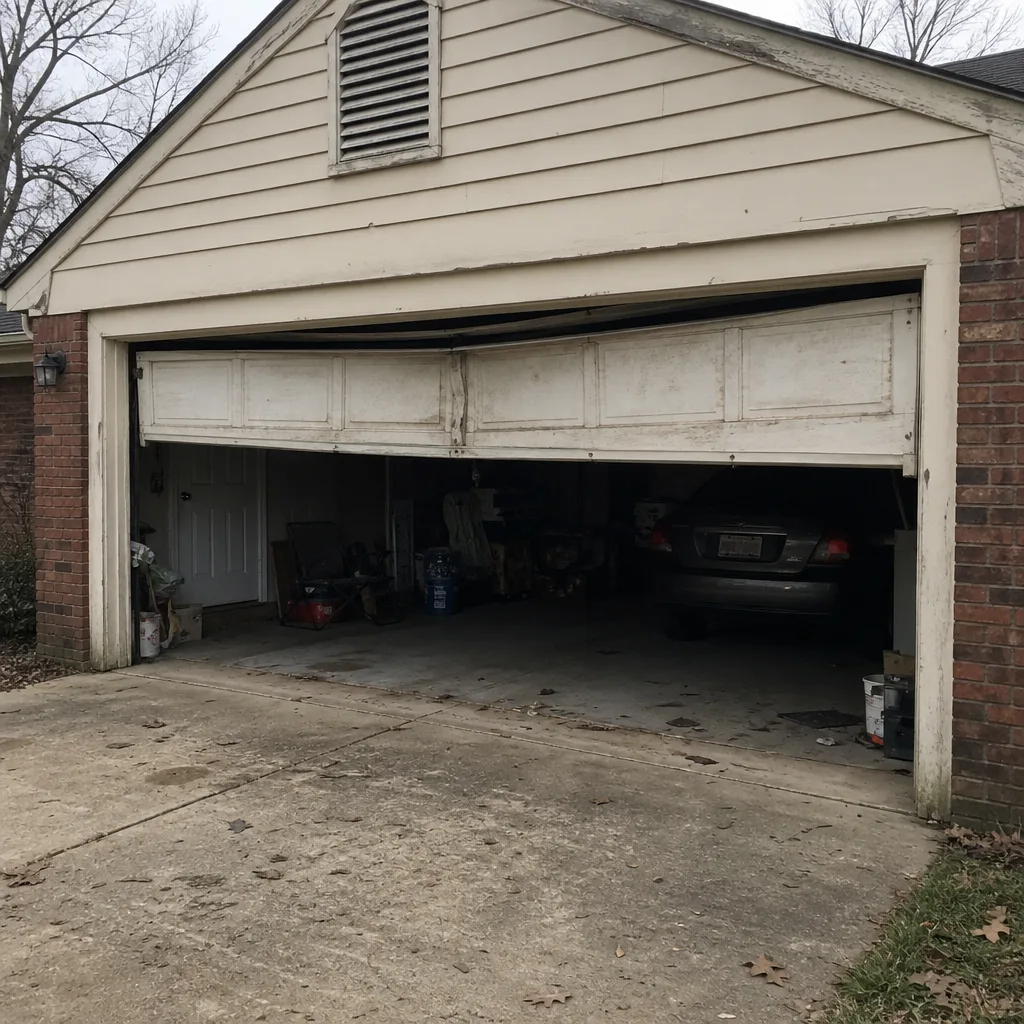 Before
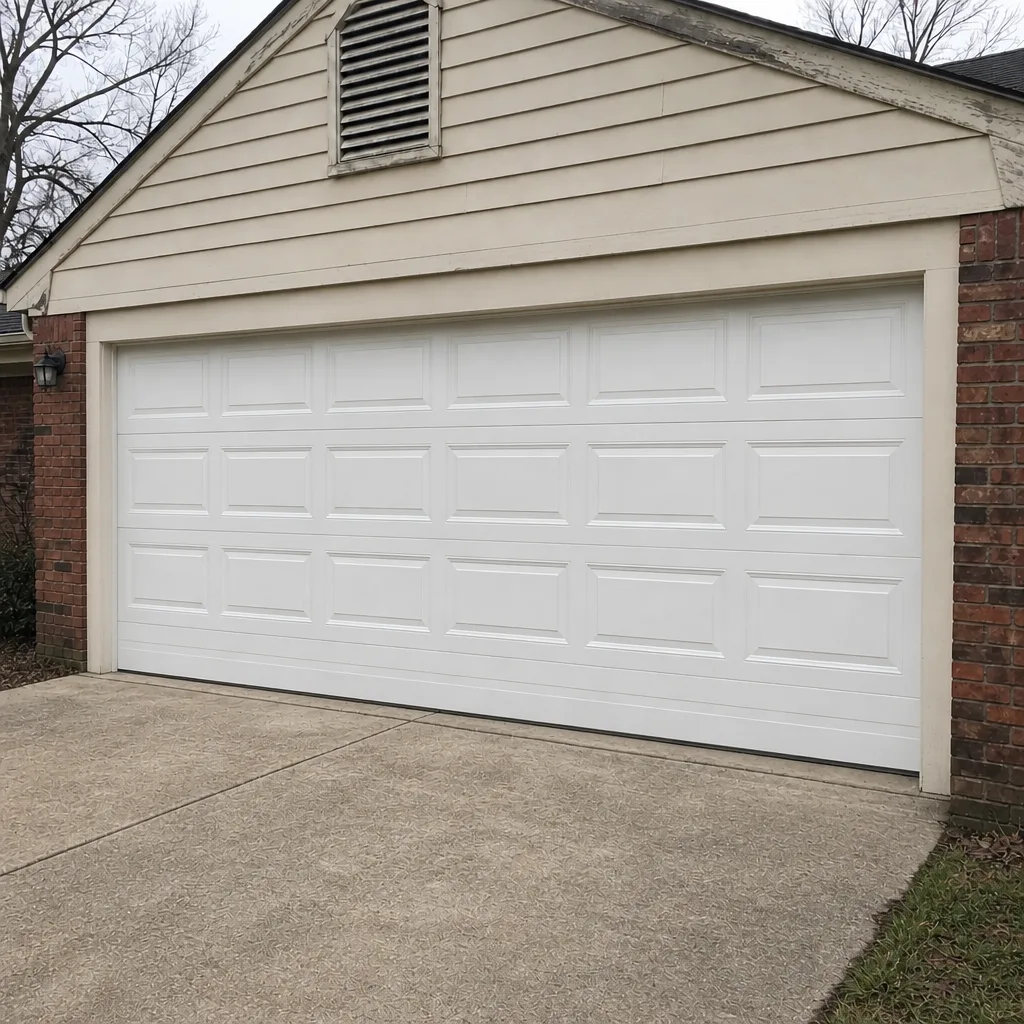 After
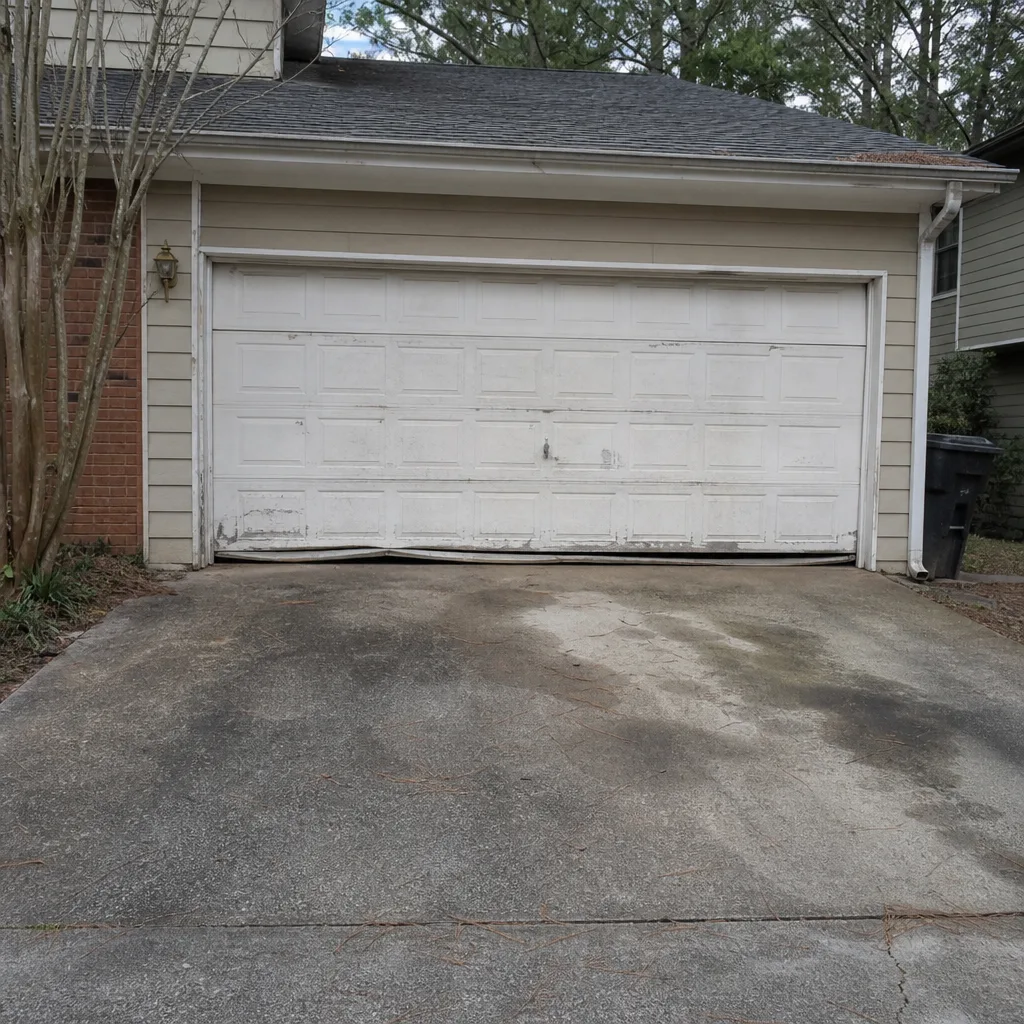 Before
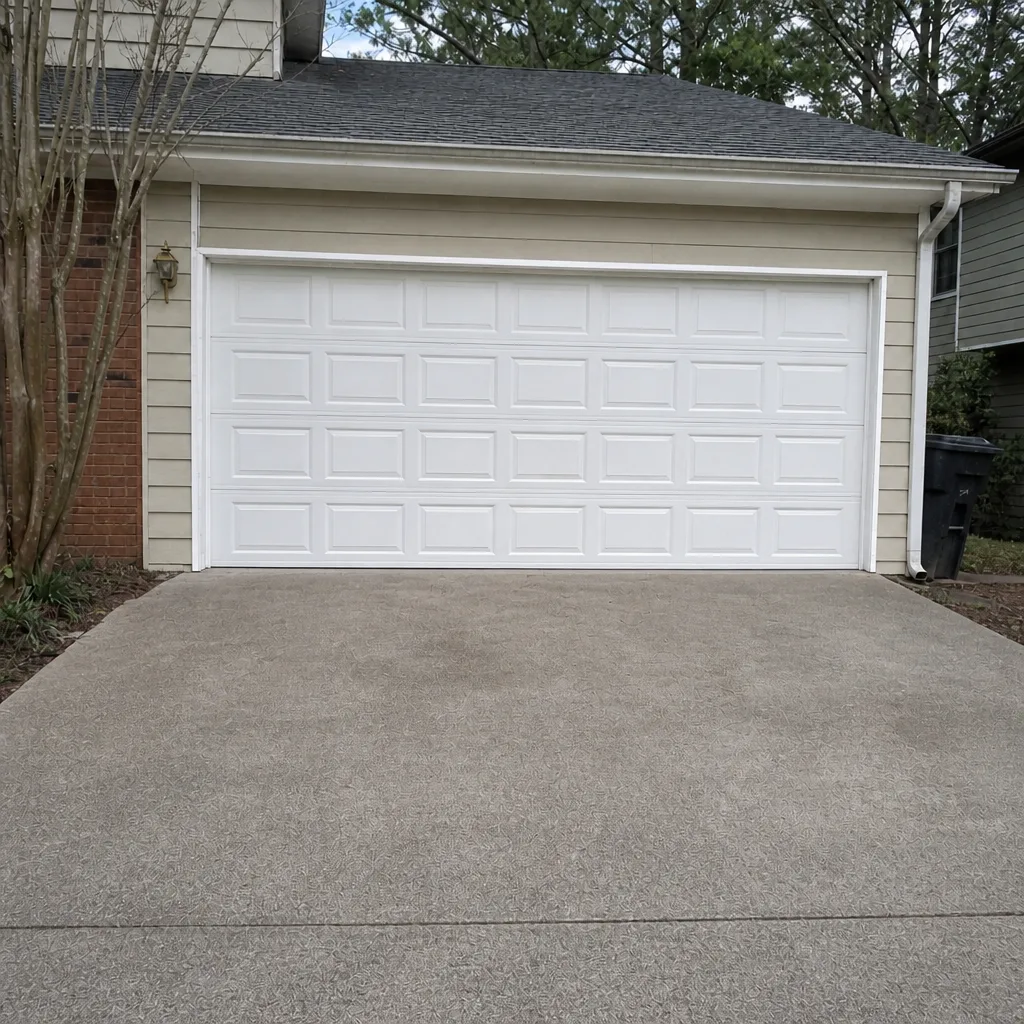 After
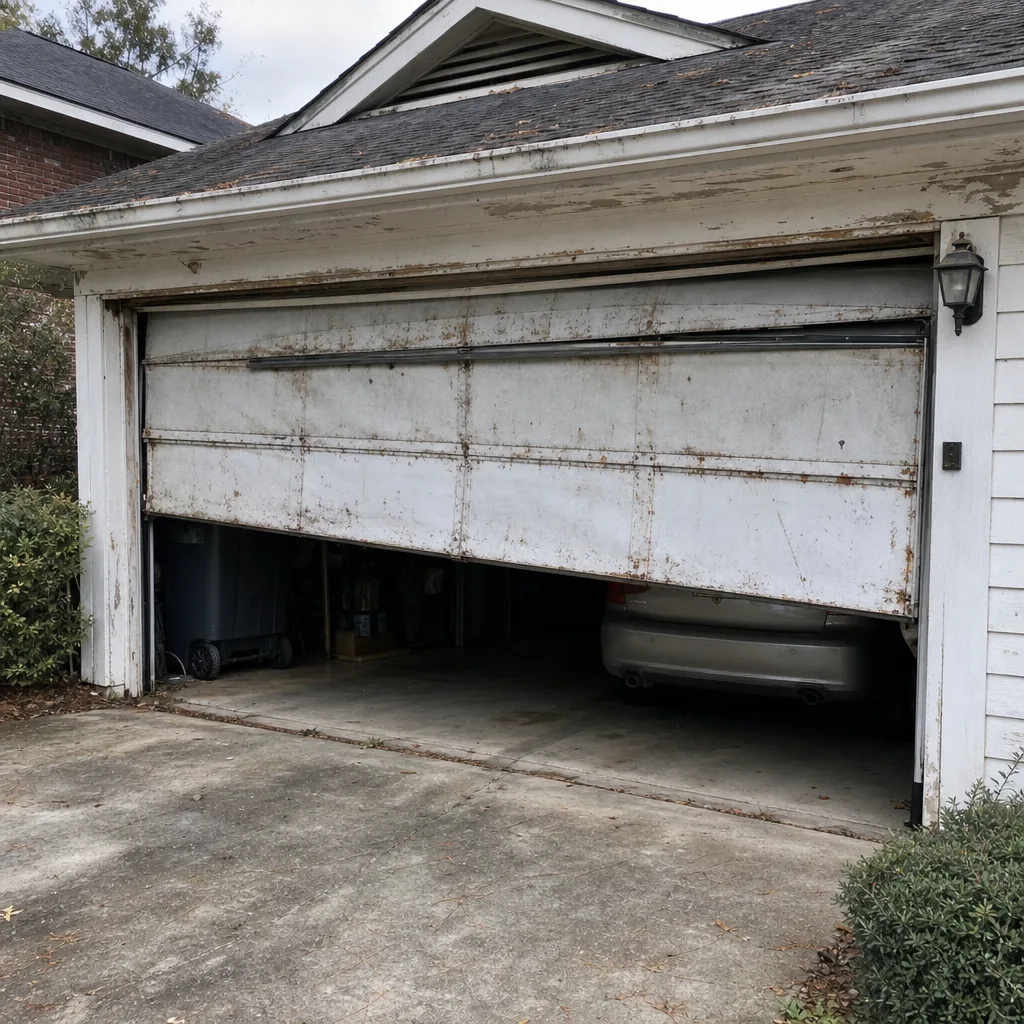 Before
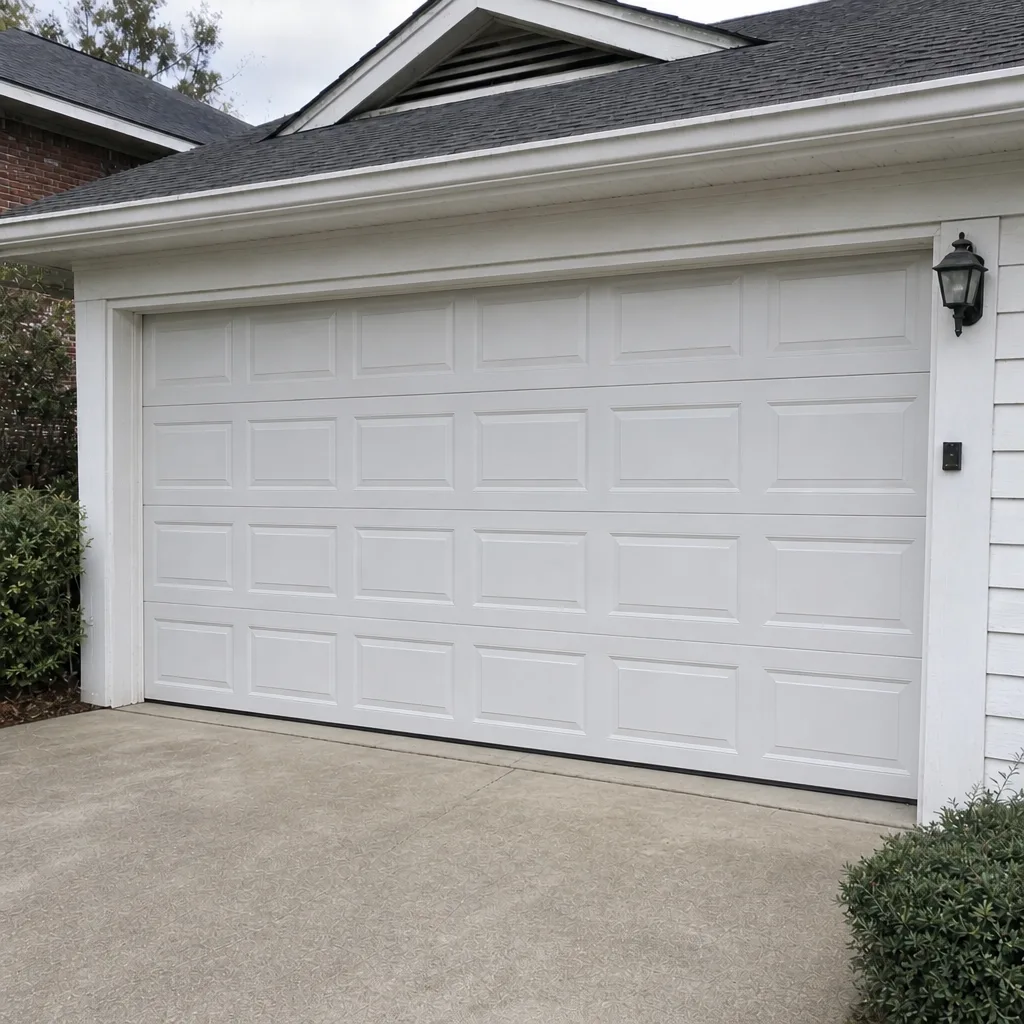 After
When to Call a Professional
Some jobs are safe to handle and some are not, and the line is clear. Call a professional if you hear a loud bang and the door won’t lift (a broken spring), if the door is crooked or the cables look slack, if the opener strains or reverses for no reason, or if the door is out of balance by hand. Also call before you install a new door or change the opening size, since that’s measured and scheduled work. For emergency problems, like a door stuck open, a snapped spring, or a door that won’t close and leaves your home exposed, emergency response is a core part of what we do. South Fulton Garage Door Repair offers free estimates in South Fulton. Call (855) 765-9962.
Frequently Asked Questions
Typical installed prices in South Fulton run from about $700 for an entry-level steel door up to roughly $2,200 for a well-insulated, heavy-gauge door with a strong finish warranty. The exact figure depends on size, material, insulation, and HOA-required style, and a free measure with a written estimate sets your final price. Call (855) 765-9962 for an exact quote; estimates are free.
Torsion springs are almost always the better fit for a South Fulton two-car garage because they handle heavier doors more smoothly and last longer than extension springs. If your door is light and older, extension springs may still work, but on a modern double door torsion is the standard. A technician can confirm which your door needs, and remember a matched pair costs about twice a single spring since they’re replaced together.
Most planned subdivisions in South Fulton require you to submit door color and style for architectural approval before installation. Check your covenant for approved colors, panel styles, and material rules, and get approval before you order. Matching an approved Clopay or Amarr model keeps the function you want without a compliance problem.
A straight like-for-like swap often doesn’t trigger a Fulton County inspection, but changing the opening size, altering framing, or adding electrical work for an opener usually does. Because how the rules are applied can vary, ask the city’s building department before work begins. We’ll flag the questions to raise when we quote your installation.
In most cases, yes. Opener repair is one of the fastest jobs we handle, and because we work on Genie, LiftMaster, Chamberlain, and Craftsman units, there’s no “we don’t support that brand” runaround. Emergency door service gets priority response, not a next-week appointment. Call (855) 765-9962 and we’ll confirm what’s available.
Usually, yes, if you live in an attached-garage home. Heavier steel and better insulation resist Georgia humidity and temperature swings, rust more slowly, and come with longer finish warranties, so the savings show up over the door’s life rather than at purchase. For a detached or rarely used garage, a budget door can be a reasonable choice.
The Bottom Line
A garage door in South Fulton has to do more than open and close. It has to survive Georgia humidity, satisfy HOA rules, and hold up through daily use for years. Pick material and gauge with the climate in mind, choose torsion springs for a two-car garage, confirm HOA requirements and permit triggers before you order, and never touch the springs yourself. Match the door and opener to a brand a technician actually knows, and most repair headaches never start. When you’re ready for a free measure and a written price, or you have a door that needs attention now, South Fulton Garage Door Repair is one call away.
Have a door that’s stuck, a spring that’s snapped, or a project you’re planning? Call (855) 765-9962 for a free estimate. We’ll look at the whole system, quote it in writing before work starts, and fix it right the first time.
Written by the team at South Fulton Garage Door Repair.