Last updated November 22, 2026
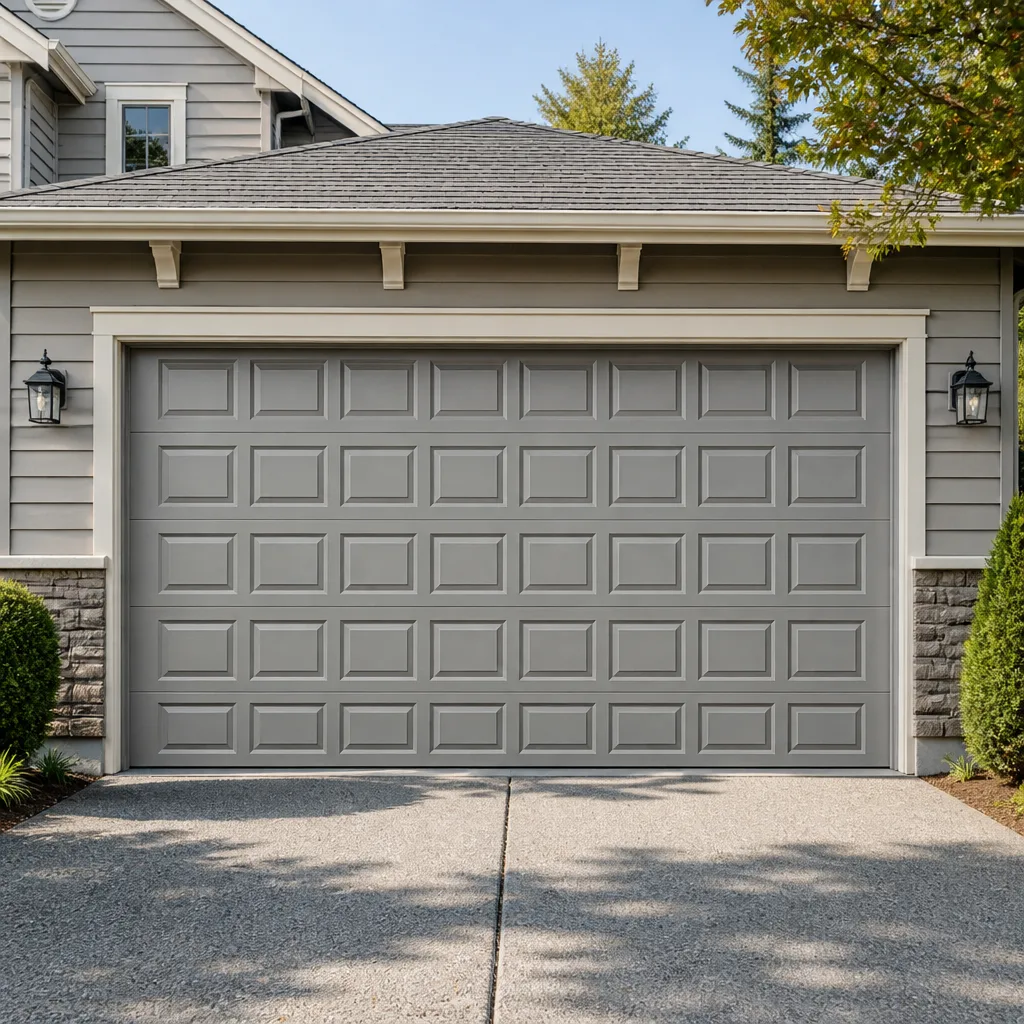 Raised-panel steel
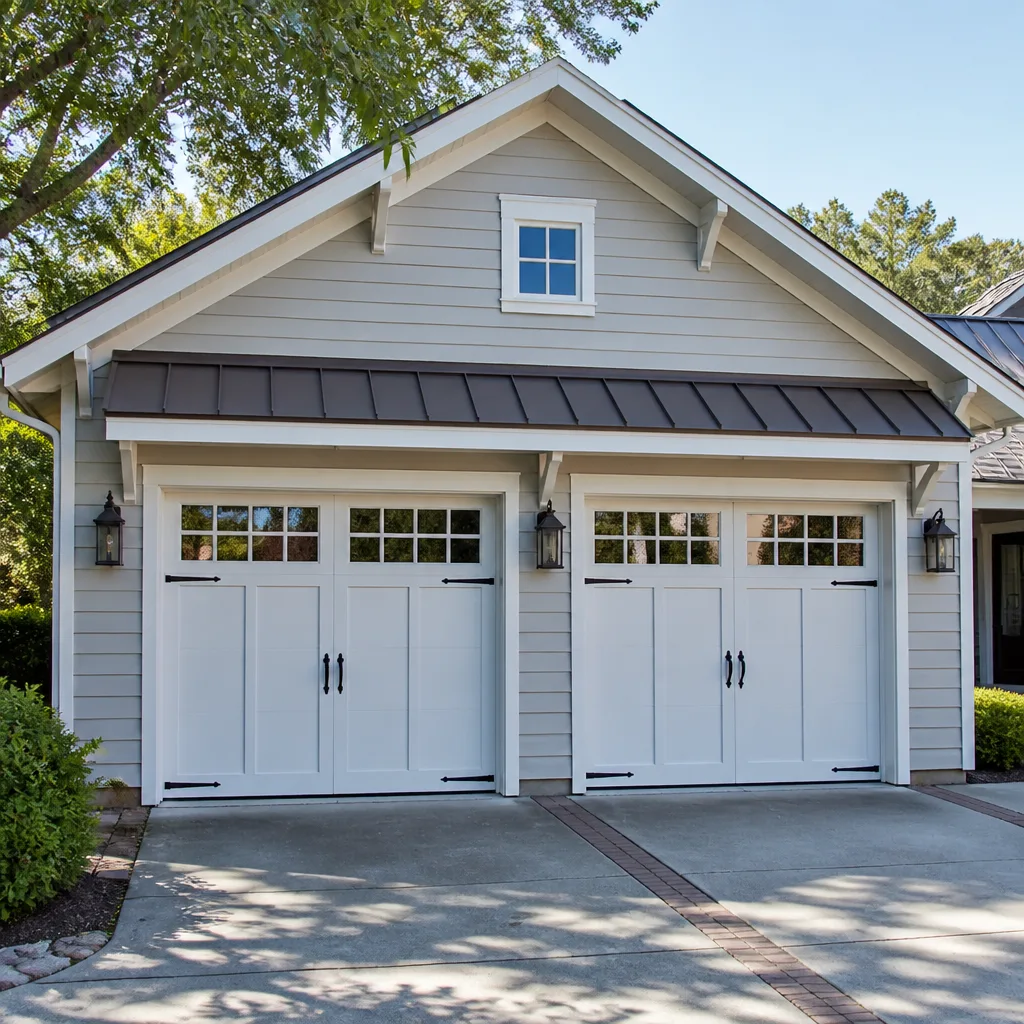 Carriage house
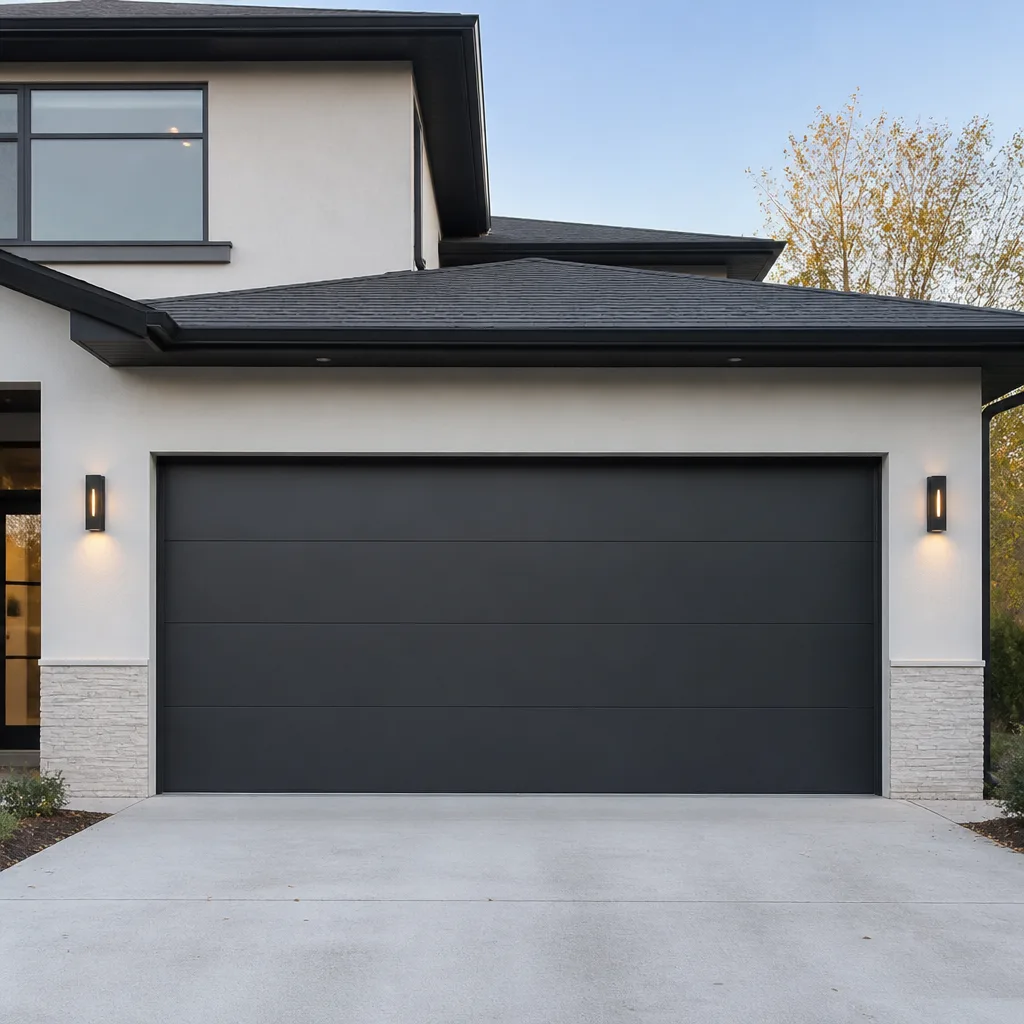 Modern flush
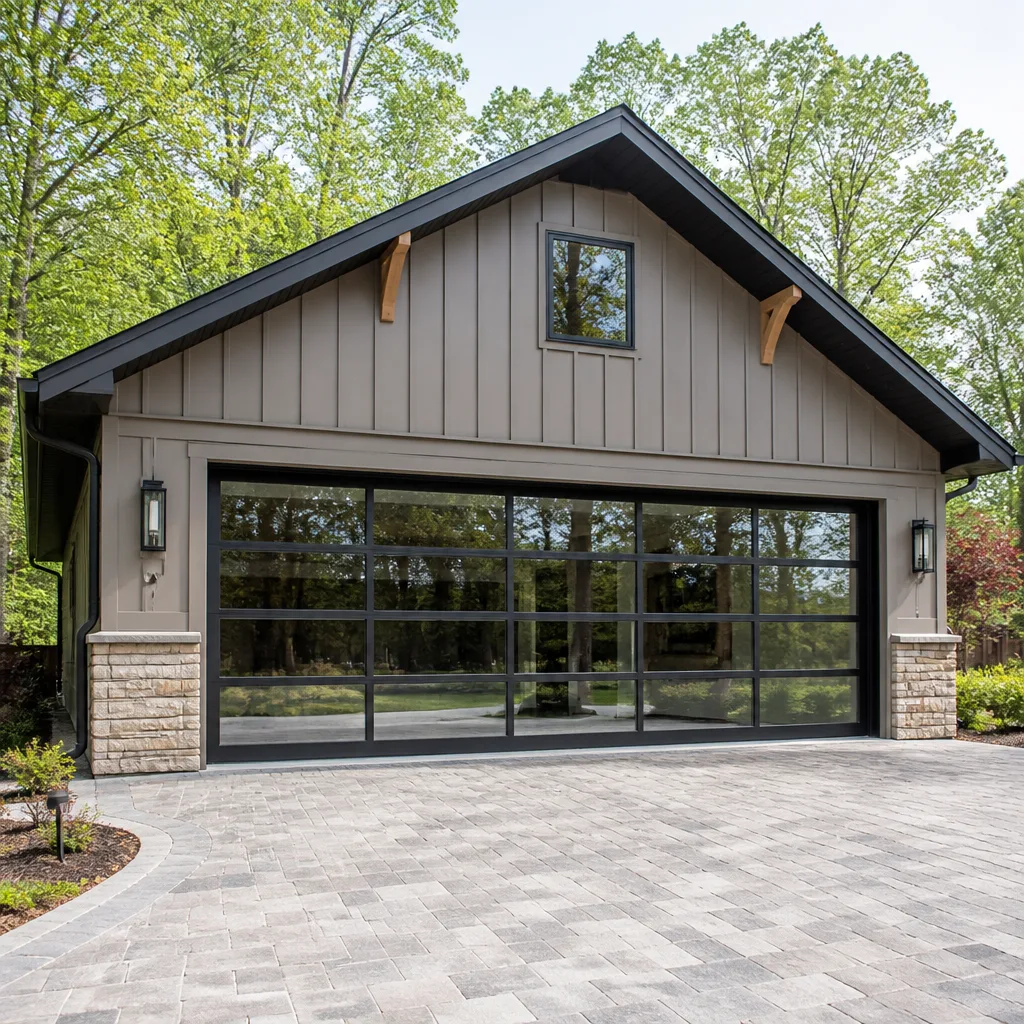 Full-view glass
 LiftMaster openers
 Chamberlain openers
Full 25-point door and opener safety check with every visit - springs, cables, rollers, tracks, and your LiftMaster or Chamberlain opener included
You get a price before we start. It does not change when the pro arrives.
Get your free estimateDIY vs Professional Garage Door: The South Fulton Homeowner’s Decision Guide
Most garage door advice splits into two useless camps: “never touch it, call a pro” and “sure, grab a wrench.” Both miss the point. The right question isn’t whether you’re handy. It’s whether the specific task in front of you can hurt you or wreck an expensive system if it goes sideways. A torsion spring stores enough energy to break bones when it lets go, yet replacing a bottom seal or realigning a safety sensor on a Sunday morning is well within reach for a careful homeowner. This guide sorts every common job into a clear risk tier so you can decide task by task, not with a blanket rule. We’ll walk through what’s genuinely safe, what needs a steady hand, and what belongs to a trained technician every time. By the end you’ll know exactly where your job sits on the South Fulton risk-to-reward map.
Quick Answer
Handle the low-risk jobs yourself: weatherstripping, lubrication, sensor alignment, keypad swaps, and light cleaning. Call a professional for anything involving torsion or extension springs, cables, tracks that have bent out of shape, and opener repairs you can’t diagnose with the manual in hand. The dividing line is stored mechanical energy and structural alignment, not how confident you feel holding a screwdriver. When a job sits in that upper tier, South Fulton Garage Door Repair handles the repair, and a free estimate tells you the number before anyone touches the door.
Styles & brands we work with
- Raised-panel steel
- Carriage house
- Modern flush
- Full-view glass
- LiftMaster openers
- Chamberlain openers
Table of Contents
- The Risk-to-Reward Grid: Every Job in Its Place
- Safe DIY: The Jobs That Genuinely Don’t Need a Service Call
- DIY With Caution: Where a Steady Hand Matters
- Professional Only: Why Springs Are a Different Animal
- How DIY Opener Mistakes Void Manufacturer Warranties
- When DIY Costs More Than Calling a Pro
- The Tool and Skill Checklist for DIY-Safe Tasks
- What South Fulton Homeowners Should Know About Their Doors
The Risk-to-Reward Grid: Every Job in Its Place
Picture a grid. On one axis is how much energy or structural tension the job involves. On the other is how much a mistake costs to undo. Jobs in the low-energy, low-cost corner are yours. Jobs in the high-energy, high-cost corner go to a pro. Everything else sits in the middle. This framing beats the cost-only comparison because a cheap repair done wrong can become the most expensive outcome of your year.
Here’s how the common jobs sort out:
- Safe DIY: lubricating hinges, rollers, and tracks; replacing bottom weather seal; aligning or cleaning safety sensors; swapping a keypad or remote battery; tightening loose hinge bolts; wiping down panels; testing the auto-reverse feature.
- DIY with caution: adjusting opener travel limits and force settings; minor panel dent repair; replacing rollers; cleaning and re-tensioning a track that’s only slightly out of line; reprogramming a remote after a power outage.
- Professional only: torsion spring replacement; extension spring replacement; cable replacement or re-spooling; drum and bearing plate work; header framing and structural repairs; any job that requires releasing tension from a loaded system.
Notice the pattern. Every job in the professional column involves stored energy that can release suddenly or a connection holding the whole door’s weight. The safe column is almost entirely about sealing, cleaning, and adjusting parts that sit at rest. The middle column is where judgment comes in, and that’s where most homeowner injuries and most “I made it worse” calls start.
In South Fulton, the middle column gets more traffic than you’d think. Homes here range from newer builds to established neighborhoods, and the doors on older properties often carry years of small adjustments that were never quite right. A travel limit setting that drifted slowly over a few seasons can look like a simple fix until you realize the door’s been hitting the frame for months. At that point a technician’s 15-minute check saves you an hour of trial-and-error, and our technicians have up to 14 years of experience reading exactly those symptoms.
A good rule of thumb: if your task changes how the door moves, lift it, or holds its weight, treat it as a pro job. If it changes how the door looks, seals, or communicates with your remote, it’s likely yours.
Safe DIY: The Jobs That Genuinely Don’t Need a Service Call
Some jobs are worth doing yourself, and calling a technician for them is a waste of everyone’s time. These tasks sit at rest. Nothing is under load. No spring is holding energy. No cable is bearing the door’s weight. If you can follow written instructions and use basic hand tools, you can handle them.
Here’s a numbered checklist of the DIY-safe jobs and what each requires:
- Replace the bottom weather seal. You’ll need a pair of pliers, a razor knife, and a replacement seal sized to your door width. Pull the old seal out of its track, slide in the new one, trim to fit. Fifteen to thirty minutes for most single-car doors.
- Align or clean the safety sensors. A soft cloth and a screwdriver. Check that the two sensors (one on each side of the door, low down) are pointed at each other, wipe the lenses, and look for any obstruction. If the door still won’t close, the issue is likely wiring or the opener itself.
- Lubricate moving parts. A can of garage door lubricant (not WD-40) and a rag. Wipe the hinges and rollers, apply a light coat, and run the door up and down a couple of times. Do this a few times a year, especially before a season change.
- Swap a keypad or remote battery. A fresh battery and a manual for your opener. If you’ve got a Craftsman or LiftMaster unit, the manual or the manufacturer’s online guide will walk you through pairing a new remote.
- Tighten loose hinge bolts. A socket wrench. Snug, not torqued. If a hinge is cracked or a bolt threads through stripped metal, stop and call a pro before it becomes a track problem.
- Test the auto-reverse feature. A roll of paper towels or a small block of wood. Place it in the door’s path, close the door, and confirm it reverses on contact. If it doesn’t, call us; that’s a safety issue that needs a look.
Each of these has one thing in common: the door stays in its tracks and nothing holds energy when you’re working on it. Now, to self-assess honestly, ask yourself three questions before starting. Do I have the right tool? Do I understand what “normal” looks like when this is done? And can I stop safely if something goes wrong? If the answer to any is no, that’s a signal, not a failure.
We’ve found that South Fulton homeowners who handle the easy jobs themselves save real money and develop a better feel for their door’s normal sounds and motion, which makes it easier to catch a problem early. The tasks below are the ones where that judgment gets tested.
DIY With Caution: Where a Steady Hand Matters
These jobs sit in the middle of the grid. They’re not dangerous in the way spring work is, but they can cost you real money in an hour if you get them wrong. The question here is whether your confidence is grounded in a manual, a video, and a little patience, or in hope.
The caution zone includes:
- Adjusting travel limits on the opener. You need to know exactly how far the door should open and close, and the adjustment screws on most LiftMaster and Chamberlain openers are small and easy to strip. If the door stops an inch short or creeps past the floor, the opener’s internal limit switch is telling you something’s off. Before turning screws, read the manual for your specific model.
- Minor panel dent repair. Light dents can sometimes be worked out with a suction cup or a small rubber mallet and a block. Anything that breaks the powder coat, cracks a panel seam, or affects the door’s structural integrity is a replacement conversation, not a repair.
- Replacing rollers. Rollers come out with the door in the up position, which is fine, but if the door drifts or binds when you’re halfway through, you’ve got a bigger alignment problem. Also, if a roller is nylon with a cracked housing, don’t reuse it in a different slot.
- Minor track adjustments. Only if the track is bent a few degrees and you’re using a padded block and careful pressure. Never force a track back into line with the door loaded against it. If a track is visibly bowed, stop; a pro needs to check whether the door panel is warped or a cable has slipped.
- Reprogramming a remote or keypad after a power outage. This is rarely dangerous but it’s easy to doom-loop yourself if you’re on the wrong programming step for a Genie versus a Chamberlain. Have the manual in front of you.
Here’s how to self-assess: if the fix requires you to change how the door behaves in motion, and you’re not certain you can verify the result safely, let a pro handle it. A travel limit that’s set too far can burn out the opener’s gear assembly over months. A roller swap that goes wrong can leave a track misaligned and the door scraping.
In South Fulton, we’ve seen a lot of doors with the same symptom: a small alignment issue that a homeowner adjusted over time and then forgot about, until a spring finally gave out and the whole system failed at once. The caution zone is exactly where a small borrowed problem becomes a full system issue. If you’re unsure, a diagnostic call costs less than the alternative. Our team handles garage door repair for all the panels, tracks, and hardware issues that start here.
Professional Only: Why Springs Are a Different Animal
Torsion springs are the reason “call a pro” exists as a phrase. Two springs, mounted on a metal shaft above the door, hold the full weight of a door that might be 150 to 300 pounds. They’re wound tight during installation and stay wound. When you turn that shaft, you’re releasing energy that was stored the moment the door was hung. A torsion spring under load can release with enough force to break a wrist or take off a finger. That’s not a liability warning; that’s the physics of the component.
Extension springs, the older style mounted parallel to the tracks, sit under the same tension but fail in a different direction. They can snap outward. The damage they do when they let go is the reason the industry moved toward torsion for new doors, and it’s also why any extension spring work is on the pro list.
Here’s what we mean by mechanical explanation, not just a warning. A torsion spring is a coiled steel bar. When installed, a technician winds it a specific number of turns depending on door height and weight. Those turns are the energy. The door’s own weight is balanced against that energy so it lifts easily. When you try to release a spring yourself, whether to replace it or adjust it, you have to unwind those turns against the door’s weight, using two steel rods that can slip out of the winding cone if the angle is wrong. If the rod slips, the spring unloads instantly and the rod swings out at whatever it’s pointed at. This is why even our own technicians treat spring replacement as a two-person, checklist job.
The same goes for cable replacement. Cables hold the door to the spring system under tension. A snapped cable can whip, and a badly re-spooled cable can leave the door unbalanced, which pushes the opener’s motor far past its design load. Our garage door spring repair work covers both torsion and extension springs, plus the cables and drums that connect them.
Header framing, the wood structure above the door that the track mounts to, is the last pro-only item. If the header is soft or sagging, the track bows, and the door bangs and binds. This is structural carpentry, not a hardware swap.
We’re direct about this on any South Fulton door we look at: if the job involves a spring, a cable, or the structure holding them, don’t do it yourself. Call and let a trained technician handle it. Safety is the whole reason the pro tier exists.
How DIY Opener Mistakes Void Manufacturer Warranties
Opener warranties are more forgiving than most homeowners expect, but only when the installer follows the manufacturer’s spec. LiftMaster and Chamberlain both cover their motors against manufacturing defects for a set term, but the terms assume the unit was installed by a trained installer to the manufacturer’s instructions. If you wire in a replacement opener yourself and skip a step the manual requires, the manufacturer can decline a warranty claim when the motor fails. That’s not a scare tactic. It’s how the paperwork reads.
Where homeowners get into trouble:
- Improperly mounting the rail. A rail that’s slightly out of level puts uneven load on the gear case. LiftMaster’s manuals are specific about level; skipping that step is the most common cause of premature gear wear.
- Wiring the safety sensors wrong. Sensor wiring is low-voltage but polarity matters. A reversed connection can work briefly and then fail, leaving the opener’s control board confused.
- Not setting the force limit correctly. Some newer units require a specific force calibration after install. If that’s skipped, the opener may stop mid-cycle and the manufacturer can attribute the fault to installation.
- Pairing a remote from a different brand. Craftsman and Genie remotes don’t cross-pair with LiftMaster and Chamberlain. A mismatched remote won’t damage the opener, but it does push homeowners into confusing troubleshooting that often ends in a warranty conversation about something unrelated.
Which brands are strictest? In our experience, the premium-line LiftMaster and Chamberlain units are the most specific about installer certification, and a warranty claim on a high-end unit is more likely to be questioned if the install wasn’t documented. Budget brands are often more lenient, but no maker is obligated to honor a claim when the failure traces to install.
The practical takeaway: if your opener is still under warranty, let a technician install any replacement unit and keep the documentation. Same-visit garage door opener repair covers LiftMaster, Chamberlain, Genie, Craftsman, and the other major residential brands, so a warranty-friendly install doesn’t mean a longer wait. If the opener’s dead and it’s not a warranty issue, that’s a same-day repair in most cases.
When DIY Costs More Than Calling a Pro
A homeowner with a stripped travel limit screw, a misaligned track, and a door that’s now hitting the frame on close isn’t saving money. They’re adding hours of labor to the service call that would have been a ninety-minute repair. That’s the pattern behind most of the “I wish I’d called first” calls we take in South Fulton.
Here’s when a DIY attempt typically exceeds the cost of a straightforward pro call:
- You’ve adjusted the travel limits more than once and the door still isn’t behaving. The next step isn’t another adjustment; it’s a diagnostic. The opener may be the wrong size for the door, or the door’s own balance may be off.
- A roller or hinge swap turned into a track problem. Once the track is out of alignment, you need to reset it against a straight reference, which most homeowners don’t have at home. The service call grows from a hardware replacement to a full track realignment.
- You replaced a remote and now nothing works. More common with mixed-brand remotes than you’d think. A technician resets the opener and pairs the right remote in one visit; a homeowner can spend an evening trying steps for the wrong model.
- You tried to work on the springs, got partway, and the door dropped. This is the worst case. Now you’ve got a damaged panel, a possibly bent track, and a pro call that includes safety inspection of the whole system, not just the spring.
- You painted or sealed a panel and created a moisture trap. Common on older South Fulton doors. A panel with trapped moisture rusts from the inside, and what was a cosmetic project becomes a replacement conversation.
Here’s the reverse test. For safe DIY jobs, a professional visit is a waste. For caution-zone jobs, a professional visit is often the cheaper option, because you get a diagnosis plus a fix instead of a diagnosis plus an attempted fix plus a fix. For pro-only jobs, there’s no comparison; the risk isn’t worth trading against a few hundred dollars.
Our free estimates in South Fulton exist for this reason. Call, describe the symptom, and we’ll tell you whether it’s a repair or a replacement. If it’s a replacement, we’ll give you a written price before any work starts. If it’s a repair, we’ll tell you that too, even when the repair isn’t something we need to do.
The Tool and Skill Checklist for DIY-Safe Tasks
Before you start any garage door job on your own, run this checklist honestly. Every “no” is a reason to pause, not a reason to push through.
- Tools on hand: screwdrivers (Phillips and flathead), a socket wrench set, pliers, a razor knife, garage door lubricant, a soft rag, and a stepladder rated for your weight. Most DIY-safe jobs need nothing beyond this.
- Manual available: the door opener’s manual, or the model number and a printed copy for the task you’re attempting. This matters most for opener adjustments and remote pairing.
- Physical ability: can you lift and hold the door steady on your own, or do you need a helper? If you’re adjusting the door’s motion, don’t work alone.
- Work space: the door’s full travel path clear, no car in the way, no kids or pets in the garage.
- A stop condition: before starting, know what would make you stop. Examples: “if the track doesn’t straighten in two tries, I stop and call.” “If the opener keeps running past the floor, I stop.”
If any of these don’t line up, you’re not ready for the task. That’s fine; it means the job belongs to someone with the tools and experience, not that you’ve failed a test. Our technicians have up to 14 years of experience with exactly these jobs, and a diagnostic call is quick and low-pressure.
The last item, the stop condition, is the one most homeowners skip. It’s also the one that saves the most money. A plan to stop at the right moment turns a potential expensive mistake into a low-cost service call.
One more tool note for South Fulton: our humidity runs higher than many inland cities, which accelerates rust on rollers, hinges, and the steel panels themselves. A light annual lubricant coat, applied to the door’s metal parts each spring and fall, is the cheapest rust prevention you can do. Skip it and you’ll spend more on replacement hardware later.
What South Fulton Homeowners Should Know About Their Doors
South Fulton’s housing stock runs from recently built subdivisions to homes with doors that have been through a decade of hot summers and wet springs. That mix matters for the DIY question because older doors tend to have more accumulated adjustment drift, and newer doors tend to have openers with electronic safety features that are picky about wiring and calibration.
A few local patterns we’ve noticed:
- Humidity is the biggest rust driver. Garage door panels, hinges, and rollers all sit in an environment that runs wet for a good part of the year. Rusted hinges bind, and a bound hinge puts side load on the track. Lubricant, applied seasonally, prevents most of this.
- Older doors often have extension springs. If you’re in an established neighborhood and the door looks original, check the spring style. Extension springs are the ones mounted alongside the tracks. Torsion springs (the horizontal bar above the door) are newer. Both are pro-only; the distinction matters for diagnosis.
- Newer openers have more electronics. The LiftMaster and Chamberlain units in newer South Fulton homes come with Wi-Fi and battery backup. That means more wiring and more settings a homeowner can accidentally change. A remote-pairing mistake on a Wi-Fi opener can look like a dead opener when it’s just a pairing issue.
- Panel dents after storm seasons. Windblown debris and tree limbs are the usual suspects. Light dents are sometimes homeowner-fixable; deeper dents on insulated panels are a replacement item.
Which brings us to brands. The doors and openers in South Fulton tend to cluster around a handful of manufacturers: LiftMaster and Chamberlain for openers, Clopay and Amarr for doors, and Wayne Dalton on older homes. When you call, knowing your brand saves a trip. We service Craftsman, Raynor, Genie, and the rest of the major residential brands, so there’s no “we don’t work on that” dead end. If your opener is a Genie and your door is a Clopay, we’re set up for both on the same visit.
The practical takeaway for South Fulton homeowners: your safest DIY work is around seals, lubrication, sensors, and remotes. Your riskiest work is around anything that holds energy or structural weight. And your biggest cost saver is a free estimate call before you start a job you’re unsure about.
Common Mistakes to Avoid
- Using WD-40 on hinges and rollers instead of garage door lubricant. WD-40 is a solvent, not a lubricant, and it strips the light oil the door needs. Use a proper lubricant and apply it lightly once or twice a year.
- Adjusting travel limits without the manual. The adjustment screws on most LiftMaster and Chamberlain units are small and easy to strip. Read the model-specific instructions before touching them, and stop if the door doesn’t respond as described.
- Trying to lift or straighten a track with the door under load. A bent track is sometimes fixable, but never with the door resting or pulling against it. This is one of the most common ways a South Fulton homeowner turns a small repair into a full-door job.
- Cutting a bottom weather seal short. It needs to reach edge to edge and tuck cleanly into the track. A short seal leaves a gap that lets rain and insects into the garage, which is exactly what the seal exists to prevent.
- Pairing a remote from a different brand. Craftsman remotes don’t pair with LiftMaster units, and Genie remotes don’t pair with Chamberlain units. Match the manufacturer and the frequency, or the remote won’t work no matter what you try.
- Ignoring a slow-blinking sensor light. A blinking light on the sensor usually means misalignment, not a broken sensor. But if the sensor’s been bumped repeatedly, the bracket may be loose, and that’s a track or bracket repair.
- Attempting spring work to save the service call. This one’s not about money. A torsion spring can injure you badly when it releases, and no amount of savings is worth that risk. Leave it to a trained technician.
Each of these mistakes is avoidable with the right tool and a little reading. The last one isn’t a mistake; it’s a decision not to make.
See the difference
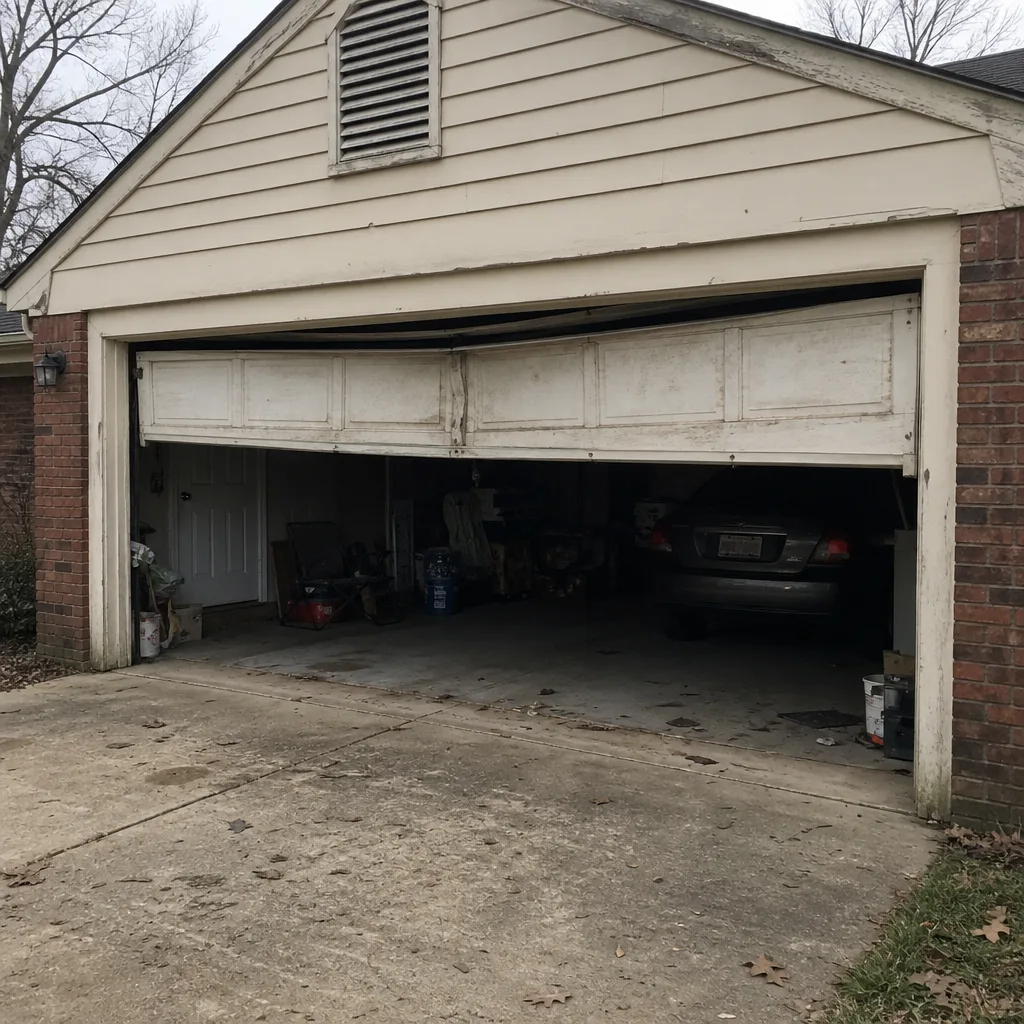 Before
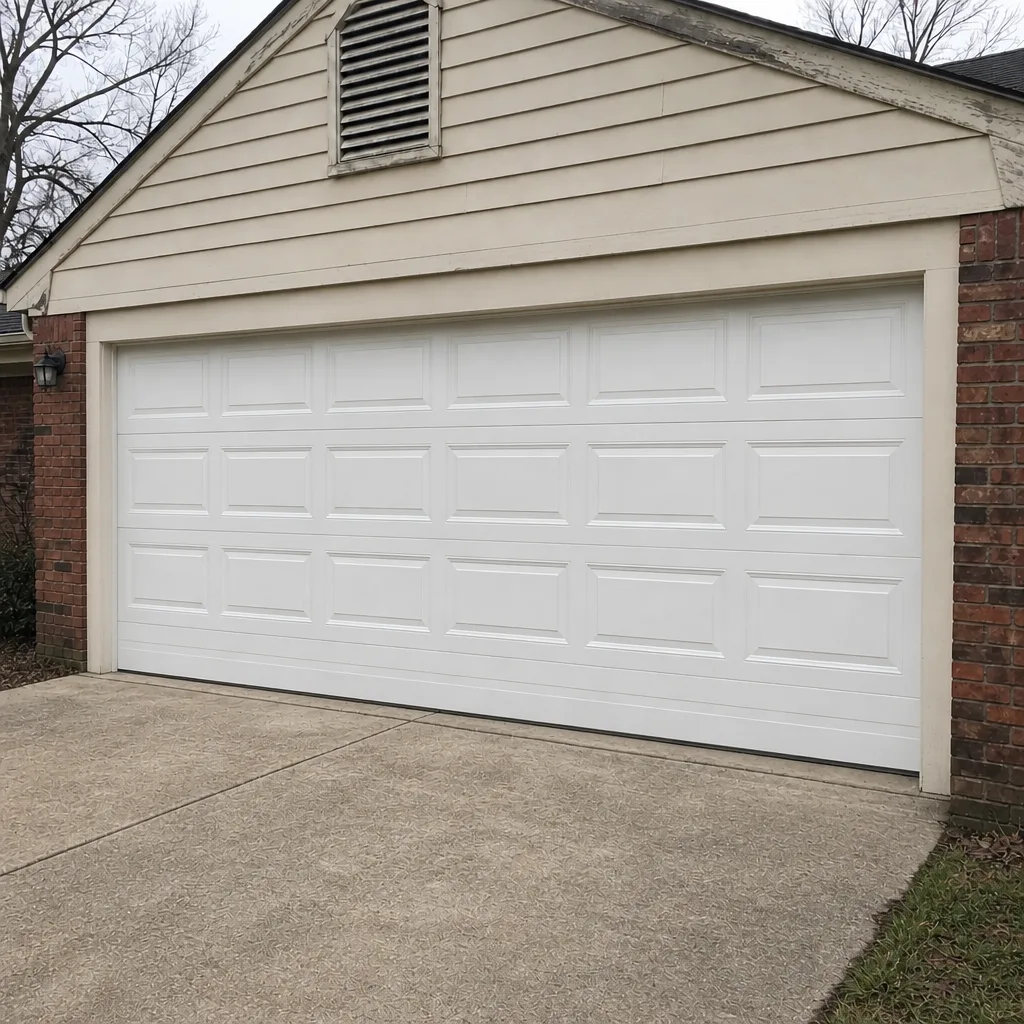 After
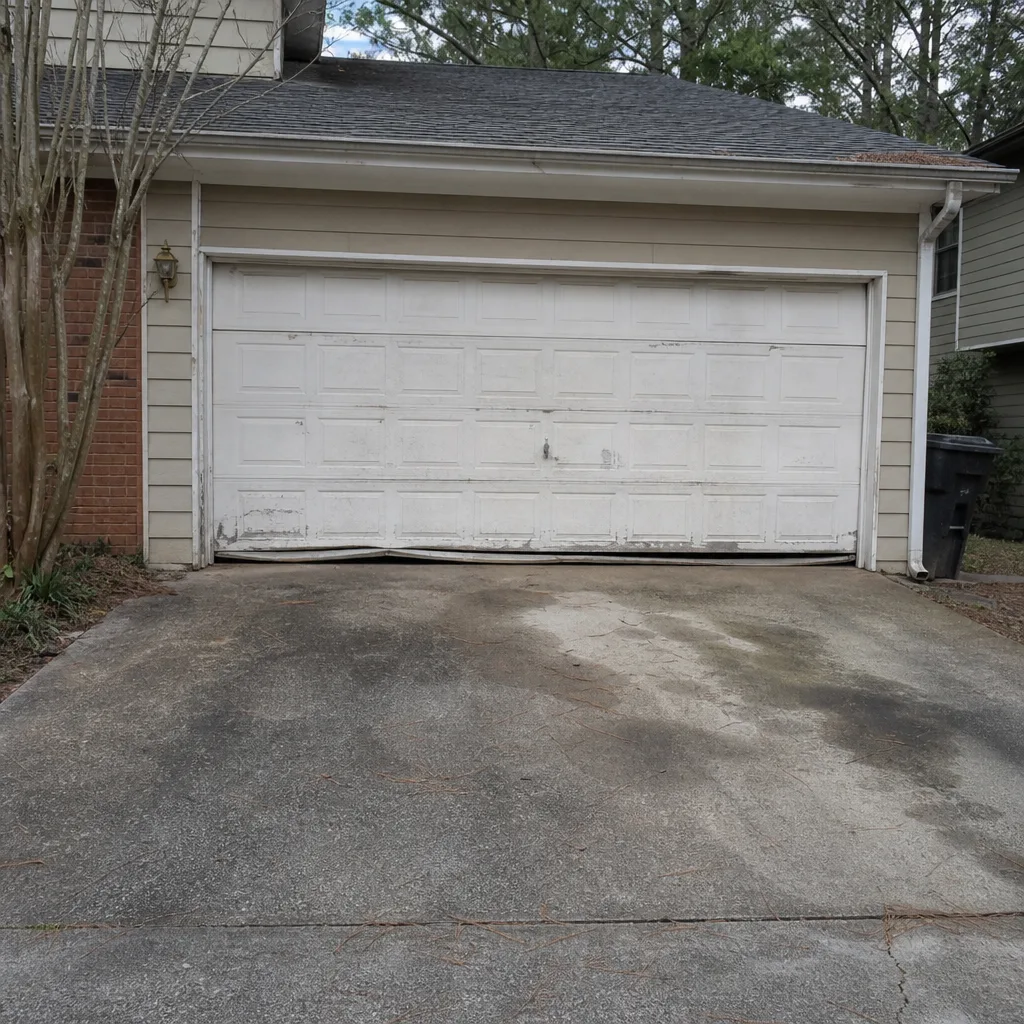 Before
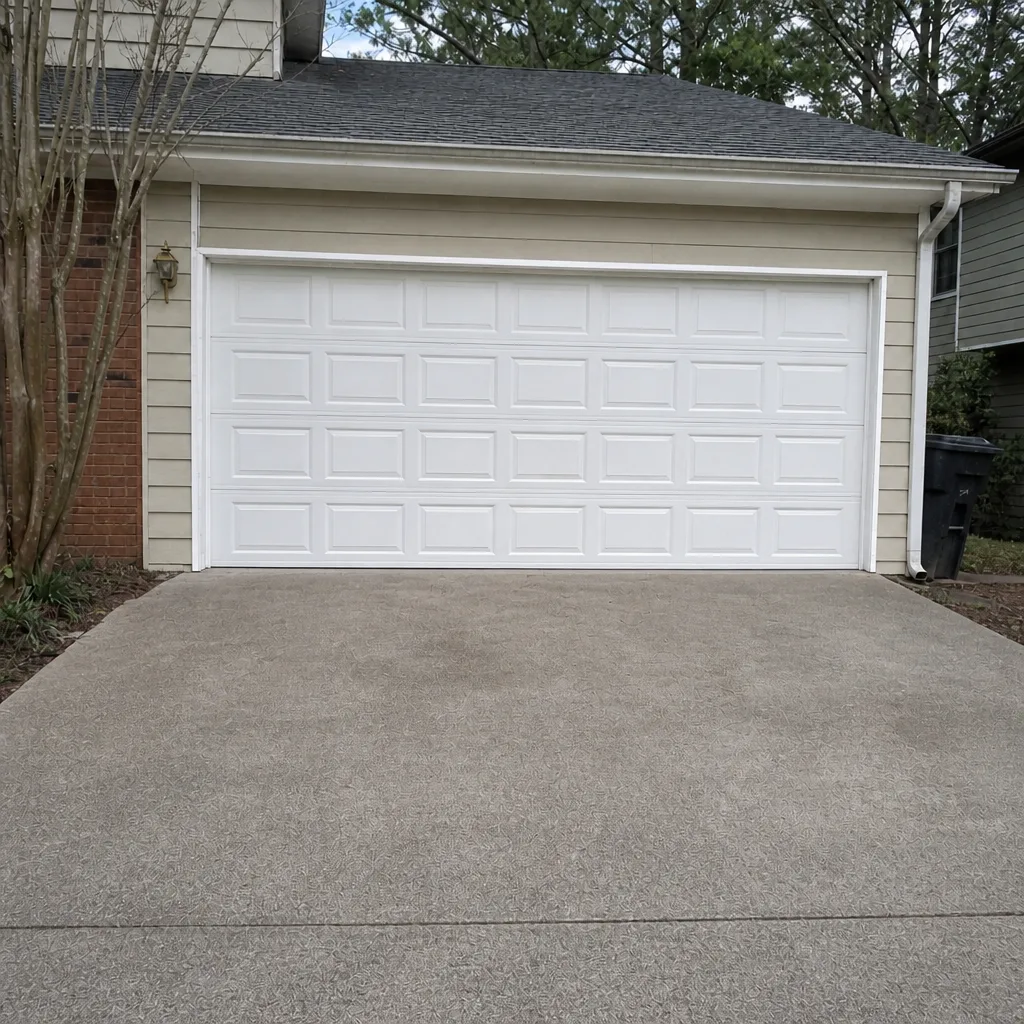 After
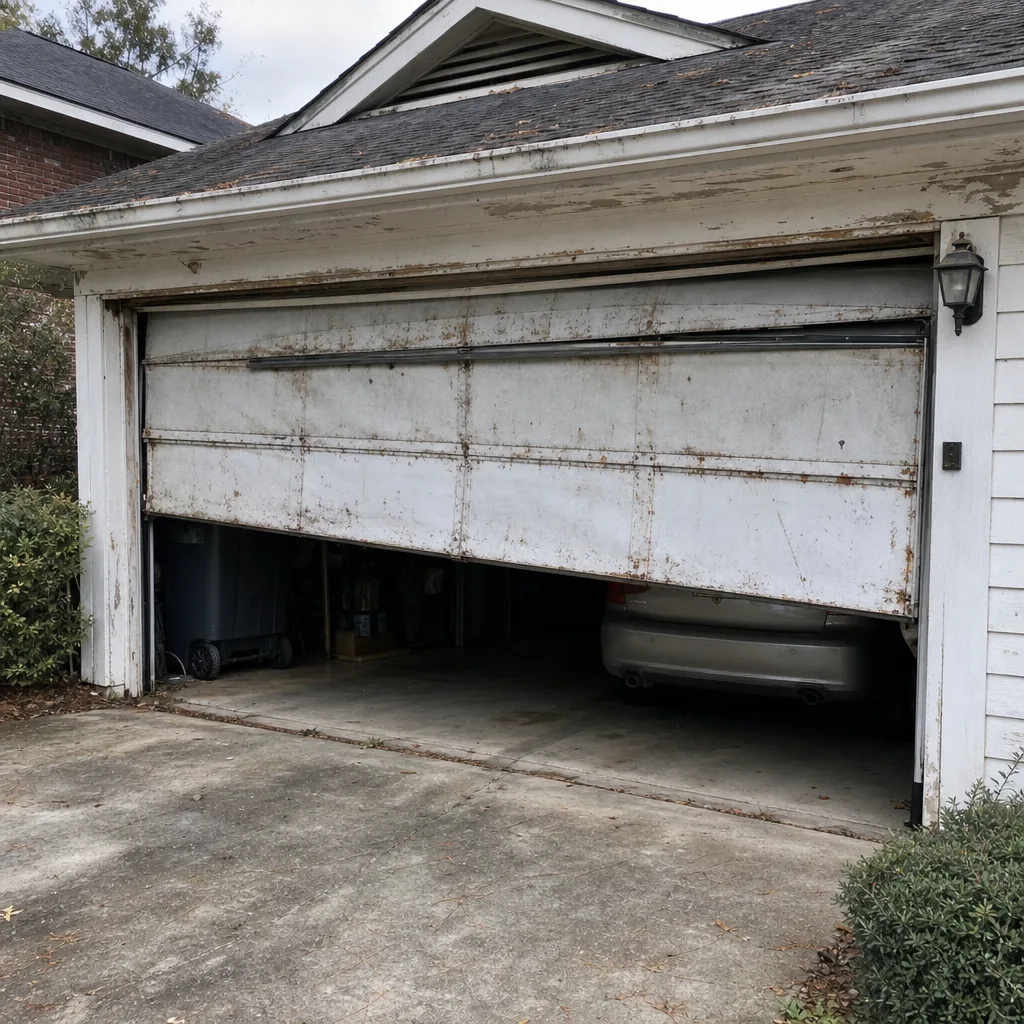 Before
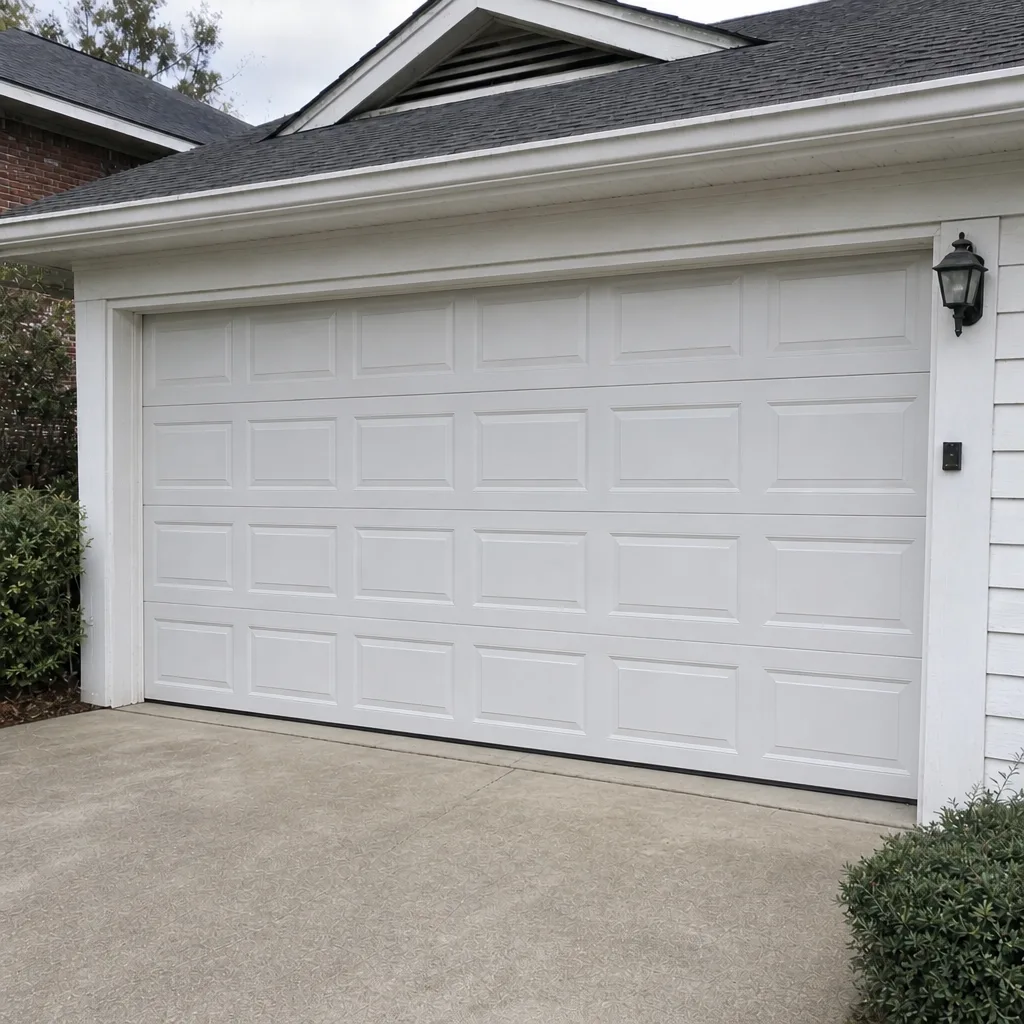 After
When to Call a Professional
Call a professional when the job involves springs, cables, tracks that are visibly bent, or anything you can’t test safely. Call us if the door won’t close, if the opener keeps running, if a panel is cracked, or if the door dropped and you don’t know why. Call us if the opener’s dead and it’s under warranty, so a technician can install a replacement without risking the coverage. Call us if you’re not sure whether your job is a DIY job or a pro job; that question itself is a reason to call.
Every South Fulton estimate is free, and the price is quoted and agreed before any work starts. Emergency situations get priority response, including Sundays, and a stuck door, a snapped spring, or a malfunctioning opener gets a same-day attempt in most cases. South Fulton Garage Door Repair covers the full system, from opener electronics and springs to panels, tracks, and new installations, so one call handles the whole problem. Call (855) 765-9962 for exact pricing and a written estimate.
Frequently Asked Questions
No, and this is the one job where the answer is firm. Torsion springs hold the full weight of the door under tension, and releasing that energy yourself can cause serious injury. Even our technicians treat spring replacement as a two-person checklist job. Call us for spring work; it’s carried out safely and correctly.
Replacing the bottom weather seal, lubricating hinges and rollers, aligning or cleaning safety sensors, swapping keypad or remote batteries, tightening loose hinge bolts, and testing the auto-reverse feature. These jobs involve parts at rest with no stored energy. Anything that changes how the door moves or holds structural weight belongs to a pro.
It can, yes, especially on premium LiftMaster and Chamberlain units. Manufacturers can decline a claim when the failure traces to installer error or skipped calibration steps. If your opener is under warranty, let a technician handle the install and keep the documentation. We repair LiftMaster, Chamberlain, Genie, and Craftsman units on the same visit.
Most repairs fall in the range of a typical service call once the issue is diagnosed, and the written estimate sets the final number before we start. Spring replacement, cable work, and opener repair each have their own price points, and a free estimate gives you the exact figure for your door. Call (855) 765-9962 for a quote.
No, we’re closed Saturdays. We’re open Sunday through Friday, 7am to 7pm. If your door fails on a Saturday, call and we’ll book you for Sunday. Emergency calls get priority during our open hours.
The local professionals we connect you with are licensed and insured as their state requires. That’s the standard you should ask for from any technician who comes to your door, and our team is set up to meet it. If you have a question about credentials before booking, ask when you call; we’re happy to walk through it.
The Bottom Line
The DIY vs. pro question is really a risk-per-task question. Seals, lubrication, sensor alignment, and remote batteries are yours. Springs, cables, header framing, and any job that releases stored energy belong to a trained technician, every time. The middle ground, including travel limit adjustments, panel dent repair, and roller swaps, depends on your tools, your manual, and your honest self-assessment. When in doubt, a free estimate call is cheaper than an attempted fix. Our technicians have up to 14 years of experience sorting exactly these jobs, and South Fulton Garage Door Repair is ready to help with the ones that matter.
Call (855) 765-9962 for a free estimate, whether you’re ready to book a repair or just want a second opinion on whether the job is yours to take on.
Written by the team at South Fulton Garage Door Repair.