Last updated November 22, 2026
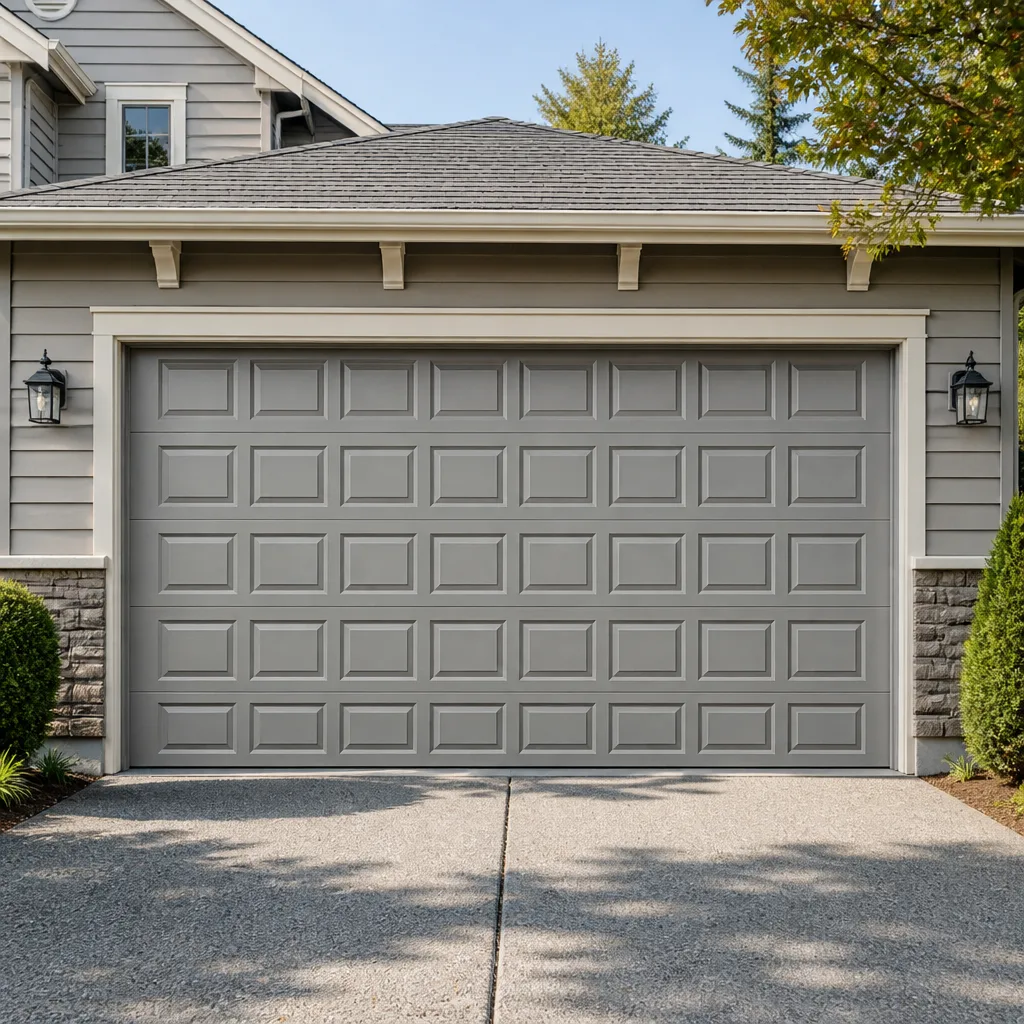 Raised-panel steel
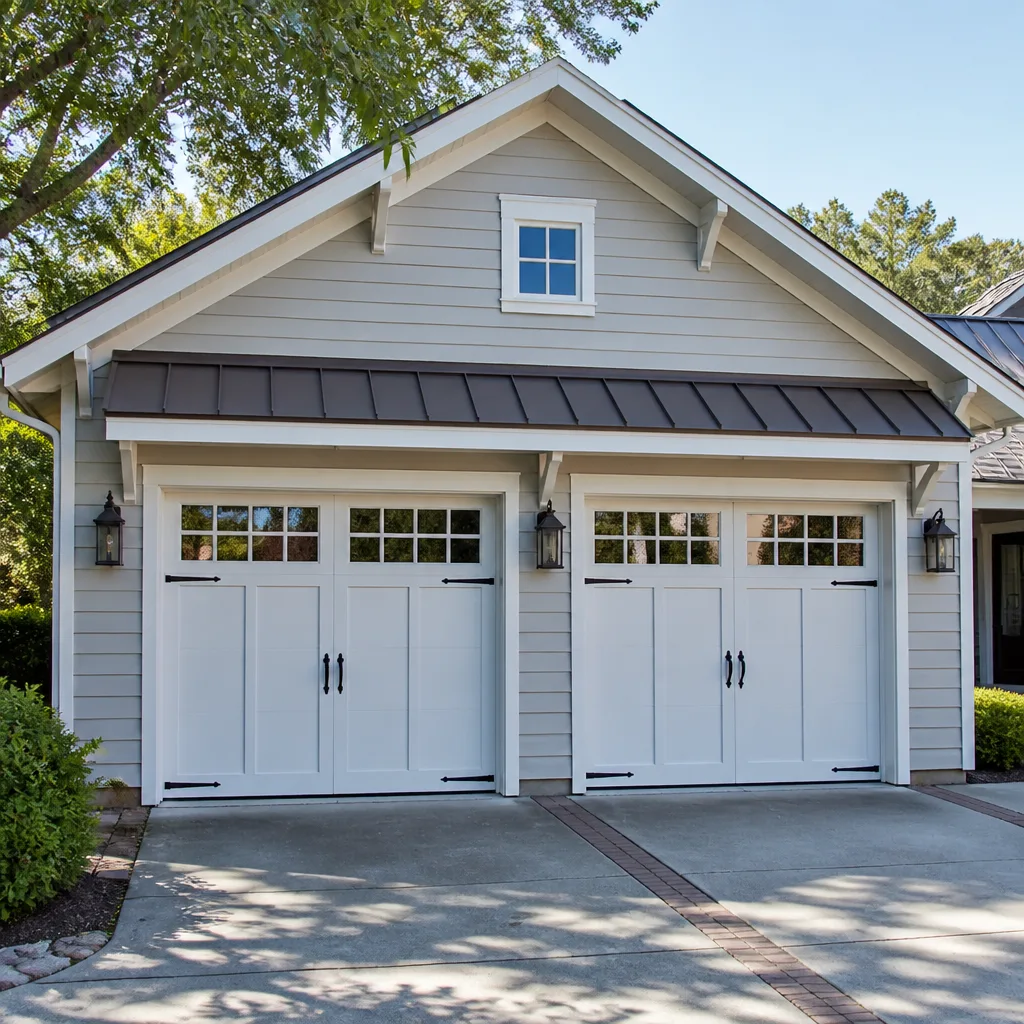 Carriage house
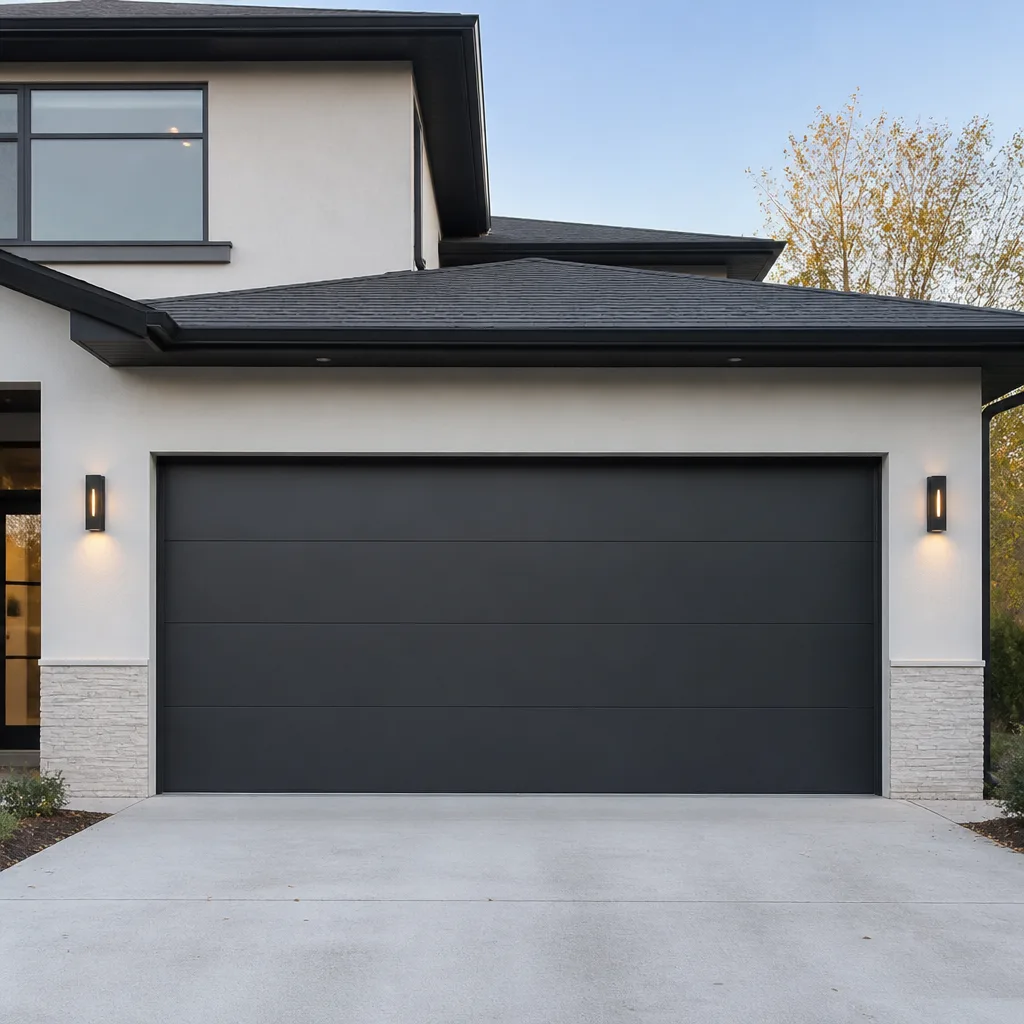 Modern flush
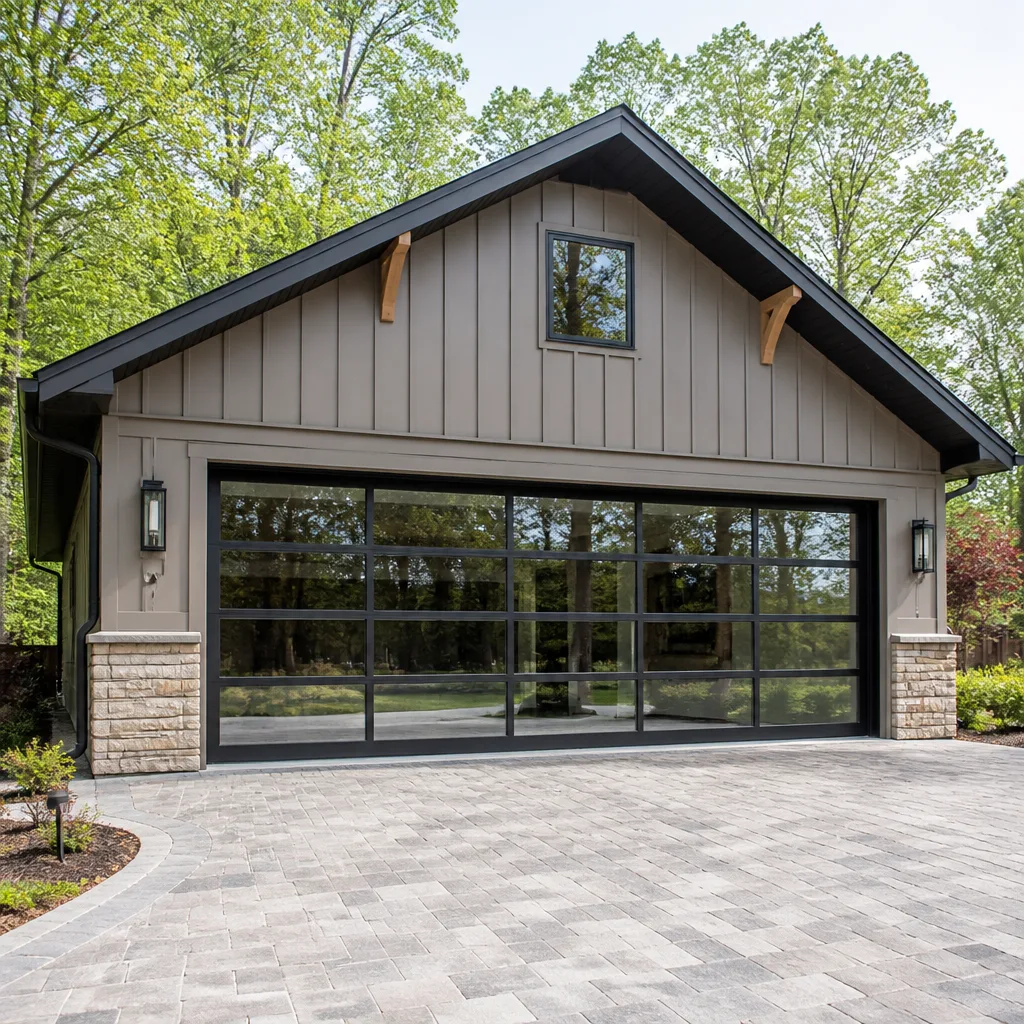 Full-view glass
 LiftMaster openers
 Chamberlain openers
Full 25-point door and opener safety check with every visit - springs, cables, rollers, tracks, and your LiftMaster or Chamberlain opener included
You get a price before we start. It does not change when the pro arrives.
Get your free estimateGarage Door Warning Signs: A South Fulton Homeowner’s Reference Guide
A grinding noise and a scraping noise sound similar, but they mean completely different things. One is usually a roller that needs lubricant, a minor fix a homeowner can handle. The other is a track misalignment that gets worse with every cycle and, left alone, can drop a door off its rails. Most warning-sign guides stop at “it’s making a noise, call someone.” That doesn’t help you. This guide goes further: it explains what each symptom tells you about the specific part that’s failing, so you can describe the problem clearly when you call, understand what a technician is telling you, and avoid paying for repairs your door doesn’t actually need. We’ll cover sounds, the visual clues hiding on parts you never look at, and which signals mean stop using the door today. This is written for South Fulton homeowners who use their door every single day.
Quick Answer
The warning signs that matter most on a garage door are a loud pop followed by a door that won’t lift (a broken spring), a door that comes down unevenly or won’t close all the way (track or cable trouble), and any frayed or broken cable. Those three mean stop using the door and call a professional. Slower symptoms like grinding, squeaking, or a door that reverses before it hits the floor are usually scheduled repairs, not emergencies, and can often wait for a normal appointment.
Styles & brands we work with
- Raised-panel steel
- Carriage house
- Modern flush
- Full-view glass
- LiftMaster openers
- Chamberlain openers
Table of Contents
- What the Sound Tells You: A Symptom-to-Cause Guide
- Visual Warning Signs You’re Probably Missing
- Scheduled Repair vs. Stop Using the Door Today
- How to Describe a Problem So the Right Parts Show Up
- Opener Warning Signs by Drive Type
- How South Fulton Heat and Humidity Affect Your Door
- The Safety Reverse Test Every Homeowner Should Know
- Common Mistakes to Avoid
What the Sound Tells You: A Symptom-to-Cause Guide
Your ears are the best diagnostic tool you have, if you know what to listen for. A garage door is a mechanical system with a handful of moving parts, and each part fails with its own signature sound. Here in South Fulton, where doors run multiple times a day in warm, humid conditions, those sounds show up sooner than homeowners expect. Match what you’re hearing to the list below.
Grinding
Grinding usually comes from the rollers or the hinges, and it’s the most forgiving sound on this list. Dry metal rubbing against dry metal creates that low, rough growl. A silicone-based garage door lubricant on the rollers, hinges, and bearing plates often quiets it. If the grinding continues after lubrication, or if it’s coming from up near the torsion bar, it’s a sign the bearings are wearing and a technician should look at it.
Scraping
Scraping is sharper and more metallic than grinding, and it’s the sound of metal dragging against metal it shouldn’t touch. That’s usually the door panels rubbing the track because the track has bent or shifted out of alignment. This one doesn’t resolve with lubricant. Every cycle the door runs against a misaligned track, the problem worsens, and eventually the door can bind or come off the track entirely. Treat scraping as a call-soon signal.
Popping
A single loud pop, especially from above the door, is the classic sound of a torsion spring breaking. After the pop, the door may feel extremely heavy or not lift at all. This is a stop-using-the-door signal. Those springs are under extreme tension, and the system is now unbalanced and unsafe. Don’t try to lift the door by hand and don’t run the opener against it.
Rattling
Rattling is loose hardware: hinges, bolts, or the brackets that hold the track. It’s rarely dangerous on its own, but it accelerates wear because a vibrating door shakes everything else loose faster. A quick tightening pass and a check of the fasteners handles most rattles. Rattling that shows up suddenly after the door takes a hit, though, can mean a bent panel or track, so look it over.
Clicking or Humming From the Opener
When the opener clicks or hums but the door doesn’t move, the motor is trying to run but the drive train isn’t engaging it. That could be a stripped gear (common on older chain and screw units), a broken belt, or a stripped trolley. This is almost always an opener repair job rather than a door job, and it’s one of the easier issues to fix once the exact drive type is identified.
We handle all of these sounds on a single visit. Whether the issue turns out to be a Raynor opener component or a LiftMaster drive, our technicians have up to 14 years of experience reading those symptoms in person.
Visual Warning Signs You’re Probably Missing
Most homeowners check the door when something feels wrong, and by then the easy fix has usually passed. The real value in a routine visual check is catching parts that fail quietly before they fail loudly. These are on components people rarely look at, so walk into the garage with a flashlight and look up.
Spring Coil Gaps
Look at your torsion spring (the coiled spring on the shaft above the door) or your extension springs (the springs that run parallel to the tracks on each side). A healthy spring looks tight and even. A worn spring can show a visible gap in the coils, or a stretched, sagging appearance. Those gaps mean the spring has lost tension and is on its way out. It will still work for a while; it just won’t balance the door properly, which puts extra load on the opener.
Frayed or Broken Cables
The cables are the thin steel braids that run from the bottom of the door up to the spring system. They’re the part most people never look at. Run a finger carefully (don’t put your hand inside the cable loop or the spring hardware) along the visible length. Any fraying, kinks, or broken strands mean the cable is failing. A snapped cable is dangerous because it can whip loose. If you see fraying, treat it like a broken spring: stop using the door and call.
Panel Corner Stress Cracks
Check the corners and edges of each door panel. Small stress cracks often start at the corners where the panel flexes under the door’s weight. Those cracks widen over time and signal the panel is weakening. Left alone, a cracked panel can fail in the middle and jam the whole door. Early detection usually lets us replace one panel rather than several.
Hinge Sag and Loose Fasteners
Run your hand along each hinge where it attaches to the panel. If a hinge feels loose or the bolts turn easily, that’s wear, and one loose hinge puts extra load on its neighbors. A quick tightening pass every few months prevents a lot of rattling and panel cracking.
Track Alignment
Stand behind the door and look up the tracks on each side. They should run parallel and even. Any bend, bow, or place where the door edge rubs means the track is out of alignment. This is the most common cause of the scraping sound we covered above.
When any of these visual signs turns up, the fix is usually simpler than it looks. If you’d rather not climb the ladder yourself, a quick call is all it takes. Our garage door repair team can inspect the whole system in one visit.
Scheduled Repair vs. Stop Using the Door Today
Not every warning sign is urgent, and treating every squeak like an emergency costs you money and time. But treating an emergency like a squeak can get someone hurt. The line between the two is clear once you know what’s on each side. Use this as your traffic light.
Stop Using the Door Today
- Any broken or snapped spring. The door is now unbalanced and unsafe to lift or run. Torsion springs are under extreme tension and should never be handled without training and the right tools.
- A frayed, kinked, or snapped cable. Failing cables can whip loose and cause serious injury.
- A door stuck halfway and won’t move. Part of the system is jammed, and forcing it makes it worse.
- A door that comes down unevenly or off the tracks. This is a real crush risk.
- A broken or missing safety reverse. That’s a hazard for anyone in the path of the door.
Scheduled Repair Is Usually Fine
- Grinding or squeaking that clears up with lubrication.
- Rattling from loose hardware.
- A door with visible coil gaps or stress cracks that still runs normally.
- An opener with minor quirks (a slow response, occasional reverse) that still completes its cycles.
We handle both, but the difference in how you should treat them matters. If it’s on the “stop” list, don’t run the door. Book the earliest appointment you can and leave it alone until then. If it’s on the “scheduled” list, you have time to think, and we can help you decide what’s worth fixing now and what can wait.
How to Describe a Problem So the Right Parts Show Up
The single biggest reason a garage door repair turns into a callback is a vague description. When a homeowner says “my door is broken,” the technician has to guess what parts to bring, and if the guess is wrong, the job gets rescheduled. A clear, specific description fixes that. We can bring the right springs, rollers, or opener gears on the first visit if we know what we’re walking into. Here’s how to describe what you’re seeing and hearing.
- Name the sound and the location. “A grinding sound from the left side of the door as it goes up” tells us it’s a roller or hinge on that side. “A loud pop, then the door won’t lift” tells us it’s a torsion spring. Say where it comes from.
- Say what the door does or doesn’t do. Does it move at all? Does it reverse before it reaches the floor? Does it open fine but refuse to close? The behavior narrows the cause faster than the sound does.
- Name the brand if you know it. A Genie opener with a stripped gear behaves differently from a LiftMaster unit with a broken belt. We service Raynor and Chamberlain systems regularly, so brand-specific details help us arrive prepared.
- Answer the age-and-use question. Roughly how many times a day does the door run? That tells us the wear level on the springs, rollers, and opener.
- Note anything you’ve already tried. If you lubricated it and the noise stayed, that’s useful. If you saw a frayed cable, say so upfront.
Those details are what let us quote accurately and arrive with the right parts. We’re set up for the full range of brands and drive types, so a Genie or a LiftMaster opener isn’t a problem on the schedule. When you call, give us the clearest description you can, and we’ll take it from there.
Opener Warning Signs by Drive Type
Garage door openers aren’t all built the same, and they don’t fail the same way. The three drive types – belt, chain, and screw – each have their own failure pattern and their own warning signs. Knowing which one you have saves diagnostic time and helps you recognize the problem before the opener stops dead.
Belt-Drive Openers
Belt drives are the quiet ones, and they fail quietly too. A belt drive’s most common warning sign is a new squeak or squeal as the belt stretches. You’ll hear it more on cold mornings, and it usually means the belt or its tension are wearing. A frayed or cracked belt is the next stage. Belt-drive units otherwise run smoother and longer than the other types, but when the belt goes, the door stops moving and the motor runs with no lift. That’s the “hums but doesn’t move” symptom we mentioned earlier.
Chain-Drive Openers
Chain drives are the noisy workhorses. Their signature sound is a clunking, clanking chain that gets louder over time as it stretches. A stretched chain can slip off the sprocket and drop the door, so noise that grows steadily is a call-soon signal. Watch for a “sag” in the chain and for rust or stiff links.
Screw-Drive Openers
Screw drives are the fewest moving parts, but the screw and the trolley’s tooth wear together. The giveaway is a grinding or squealing noise and a door that jerks in stops and starts rather than moving smoothly. A worm gear or screw with stripped teeth won’t lift the door cleanly, and it’s a fixable part – a Genie screw drive especially can often be revived with the right parts.
What All Openers Share
- The rolling-code remotes stop working. A sign the motor board’s receive section is failing, not a battery.
- The door reverses before hitting the floor. Often a safety sensor problem, not a drive problem.
- The door opens fine but won’t close. Usually the safety reverse, possibly the limit switch setting.
- Everything slows down. A worn drive or a tired motor capacitor.
Any brand, any drive type – one visit usually handles it. If you want to understand exactly what a fix involves, our garage door opener repair page lays out the process, and we’re glad to walk through it on the phone first.
How South Fulton Heat and Humidity Affect Your Door
South Fulton’s summer heat and year-round humidity put more wear on a garage door than a lot of homeowners realize. The garage is often the hottest room in the house in the middle of a Georgia summer, and the door lives in that space all day. Here’s how the local climate interacts with the warning signs you’re watching for.
The heat matters most for cables and springs. Steel cables expand and contract with temperature swings, which works them loose over time – one reason frayed cables are worth checking regularly. The metal in the springs and hinges also expands and contracts, so the lubrication you apply in spring handles the squeaks that show up in June.
Humidity is a different issue. South Fulton homes often sit on graded lots in neighborhoods with trees and shade, and the garage traps a lot of moisture. That moisture rusts the chain in a chain-drive opener and stiffens the rollers and hinges. If you notice rust on a chain or a door that gets heavier to lift after rain, that’s humidity working its way into the hardware. A dry monthly wipe-down and a light coat of lubricant on the moving parts are cheap insurance.
Older homes and neighborhoods with mature trees also mean more debris and occasional impact damage. A door that takes a hit from a falling branch or a stray ladder dent shows up as a sudden rattle or a bent track. Neither is unusual here. If your door takes a hit, check the tracks and panels before you run it.
The Safety Reverse Test Every Homeowner Should Know
The photo-eye sensors at the bottom of your garage door are the part most homeowners never test, and they’re the part that protects anyone who walks or plays in the path of the door. The test takes under a minute and should run once a month. It also catches a failing safety reverse before it becomes a hazard.
- Place a flat object in the door’s path. A piece of wood or a stack of books about six inches thick works fine.
- Start the door closing from the wall button or remote. Stand well back and watch.
- The door should reverse the moment the sensors break the beam. It should also reverse when it feels an obstruction.
- If the door keeps going or doesn’t reverse, stop. That’s a safety fail and a stop-using-the-door signal until it’s fixed.
Also clear the path between the two sensors. One small leaf or piece of debris in front of the photo eye can make the door refuse to close, and that’s one of the most common false alarms we hear about. The fix is usually a quick one – clean the lens, realign the sensors, and test again.
Common Mistakes to Avoid
- Ignoring a scraping sound. Scraping means the door is rubbing against a misaligned track, and it won’t fix itself. Every cycle wears the track and the panels more, so a small alignment issue becomes a bigger one.
- Lubricating and scheduling in the same breath. Lubricant is what you do first to see if the problem clears up. Don’t book a repair before you’ve tried it on a grinding or squeaking door.
- DIY on the springs. Torsion springs and cables are the highest-risk parts on the whole system. They’re under extreme tension, and a slip can cause serious injury. Leave those to a trained technician.
- Forcing a stuck door open. If the door is jammed, forcing it can bend the track and crack the panels. Stop and call.
- Skipping the safety sensor test. A failing safety reverse is a hazard, not a nuisance. Test it monthly.
- Calling with a vague description. “It’s making a noise” gets you a diagnostic visit. “A grinding sound from the left track on the way up” gets you a technician who arrives with the right parts.
- Downplaying frayed cables. A frayed cable can snap and whip loose. Treat it like a broken spring.
See the difference
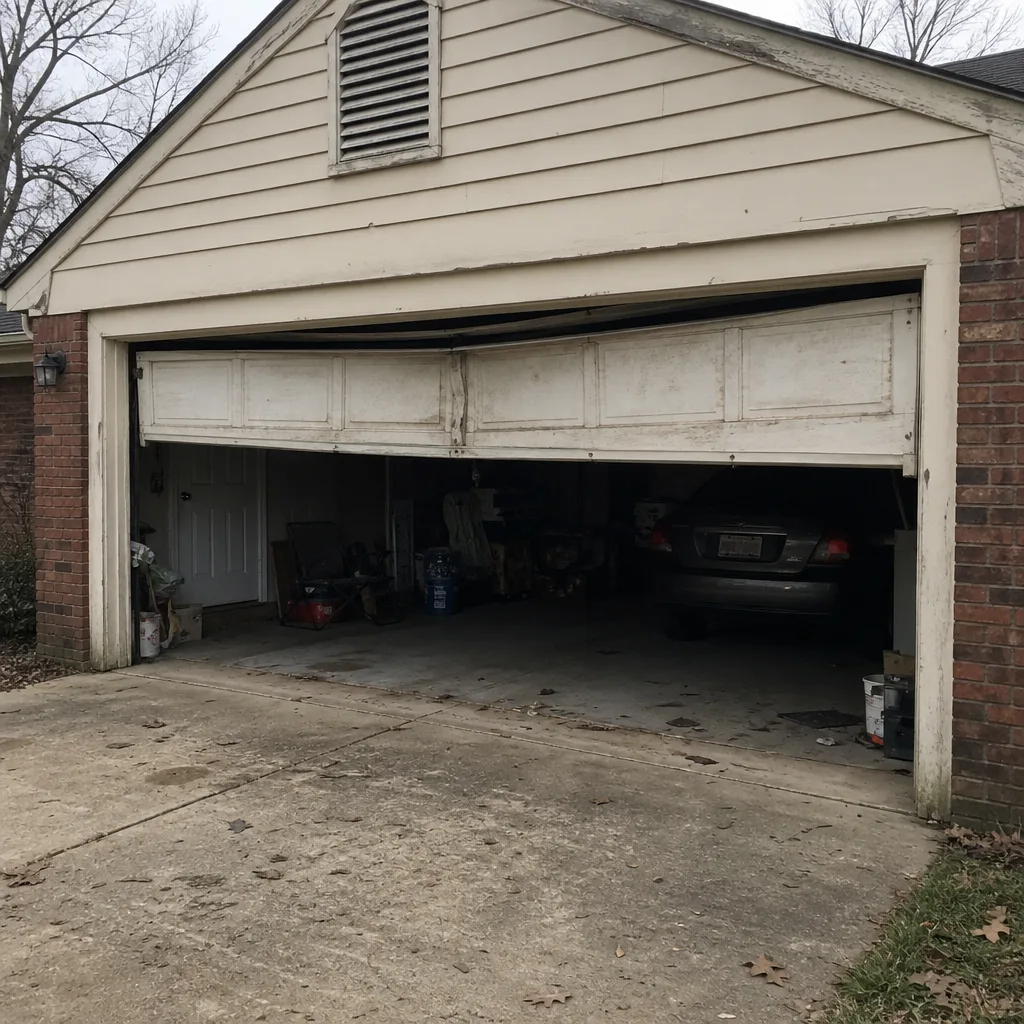 Before
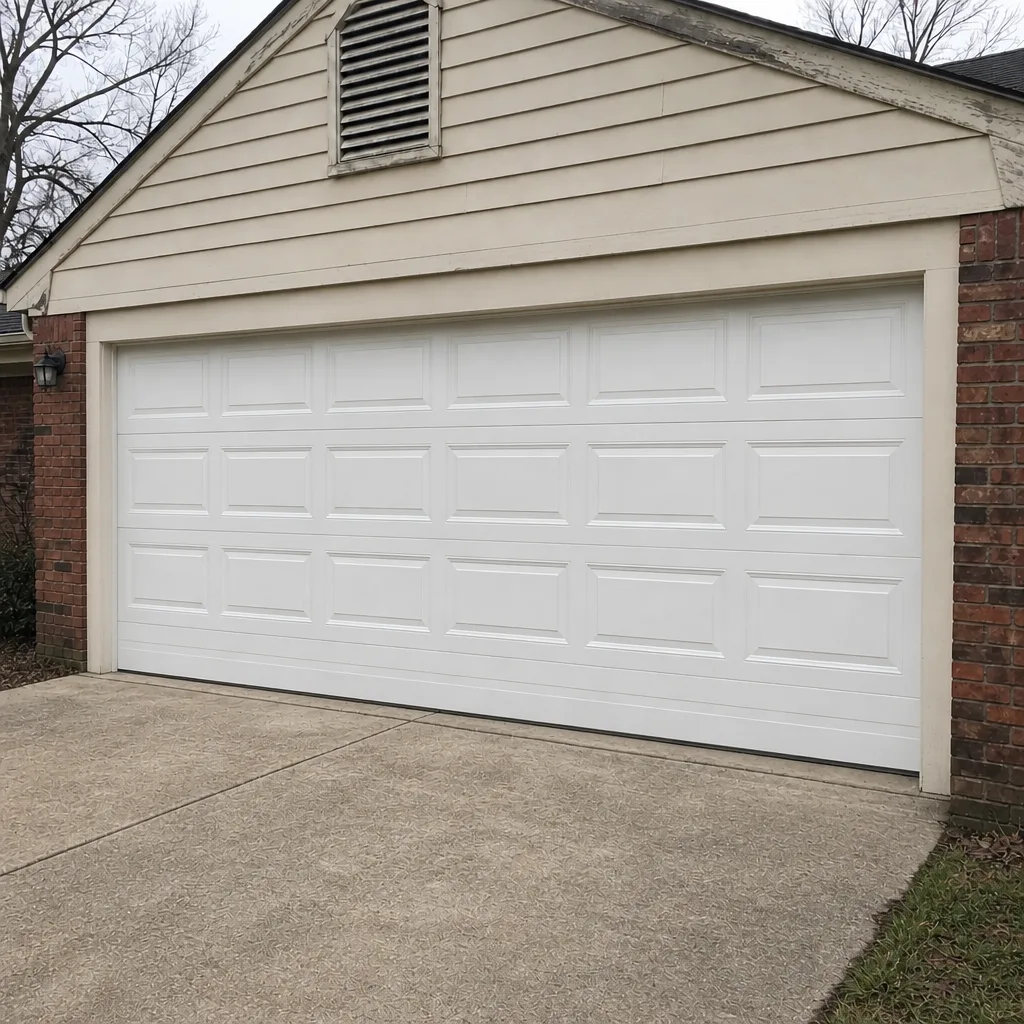 After
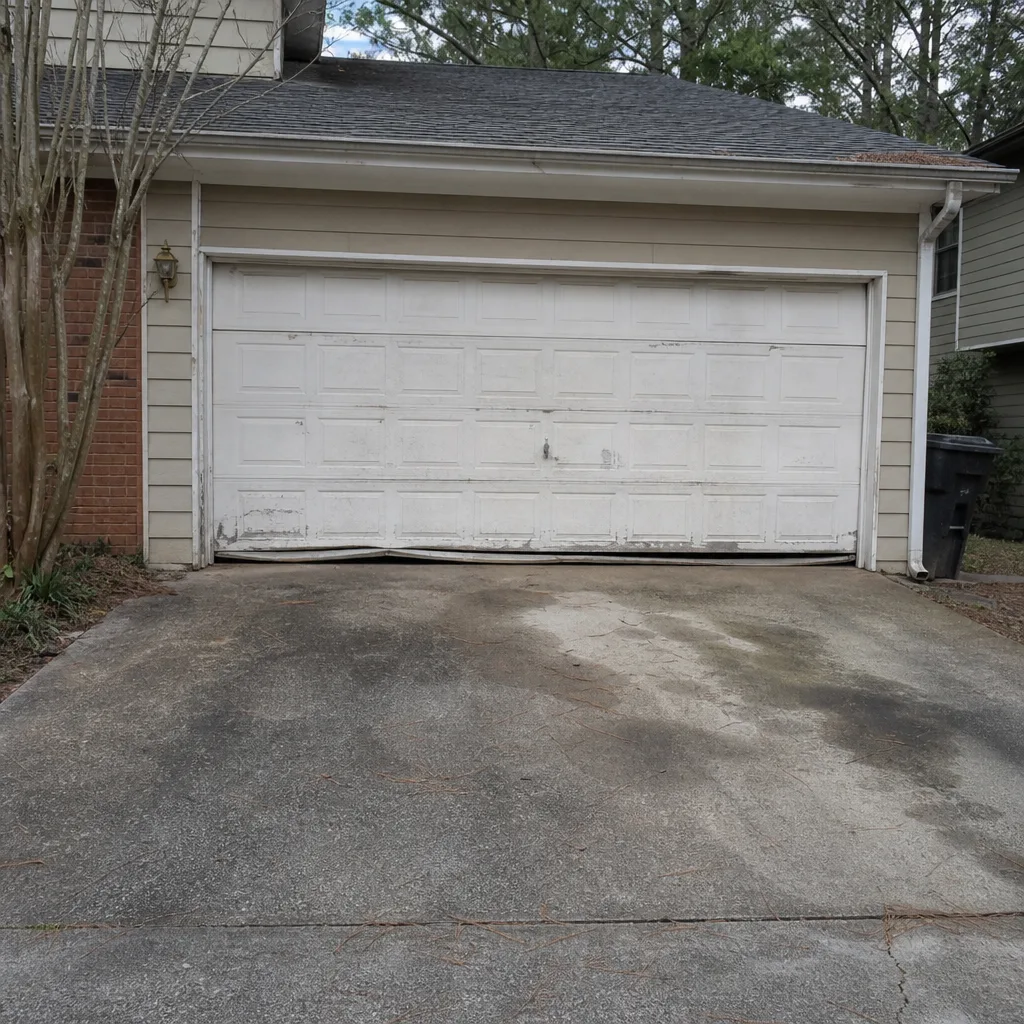 Before
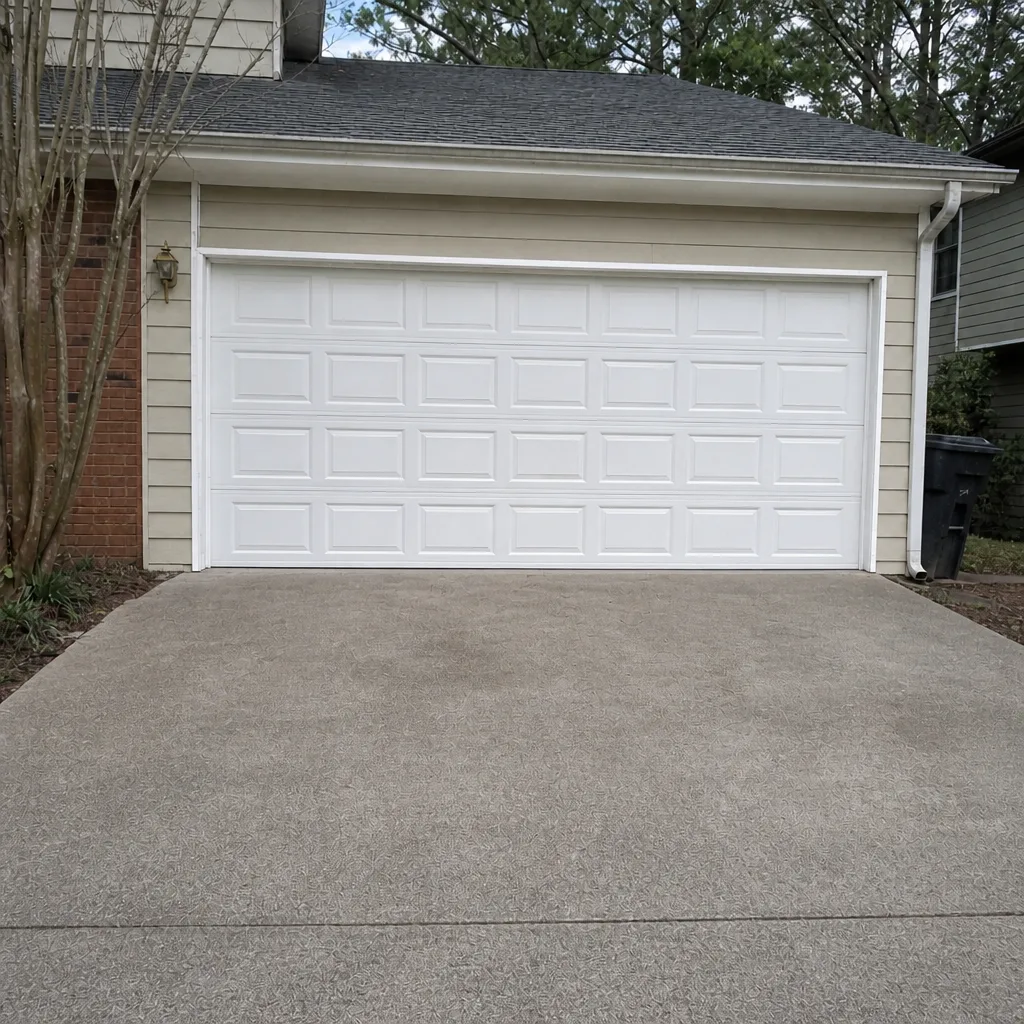 After
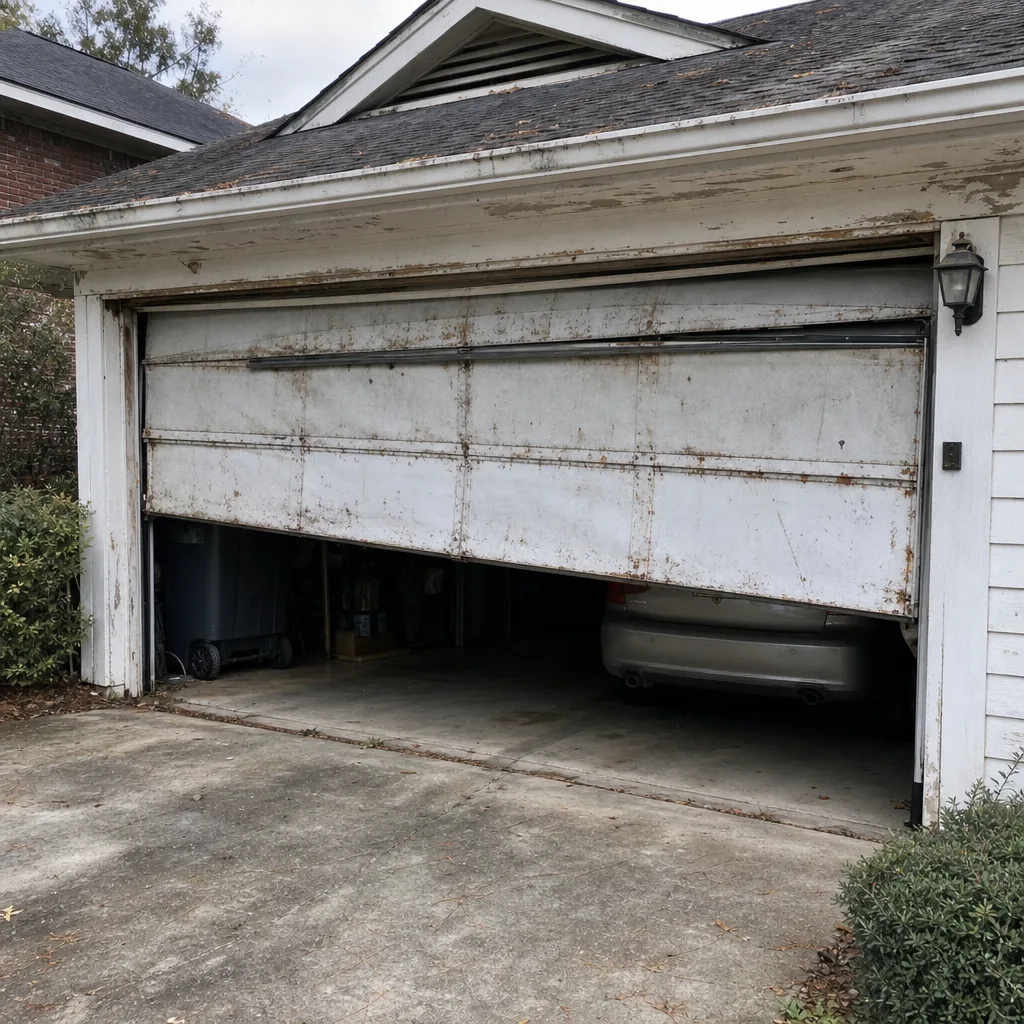 Before
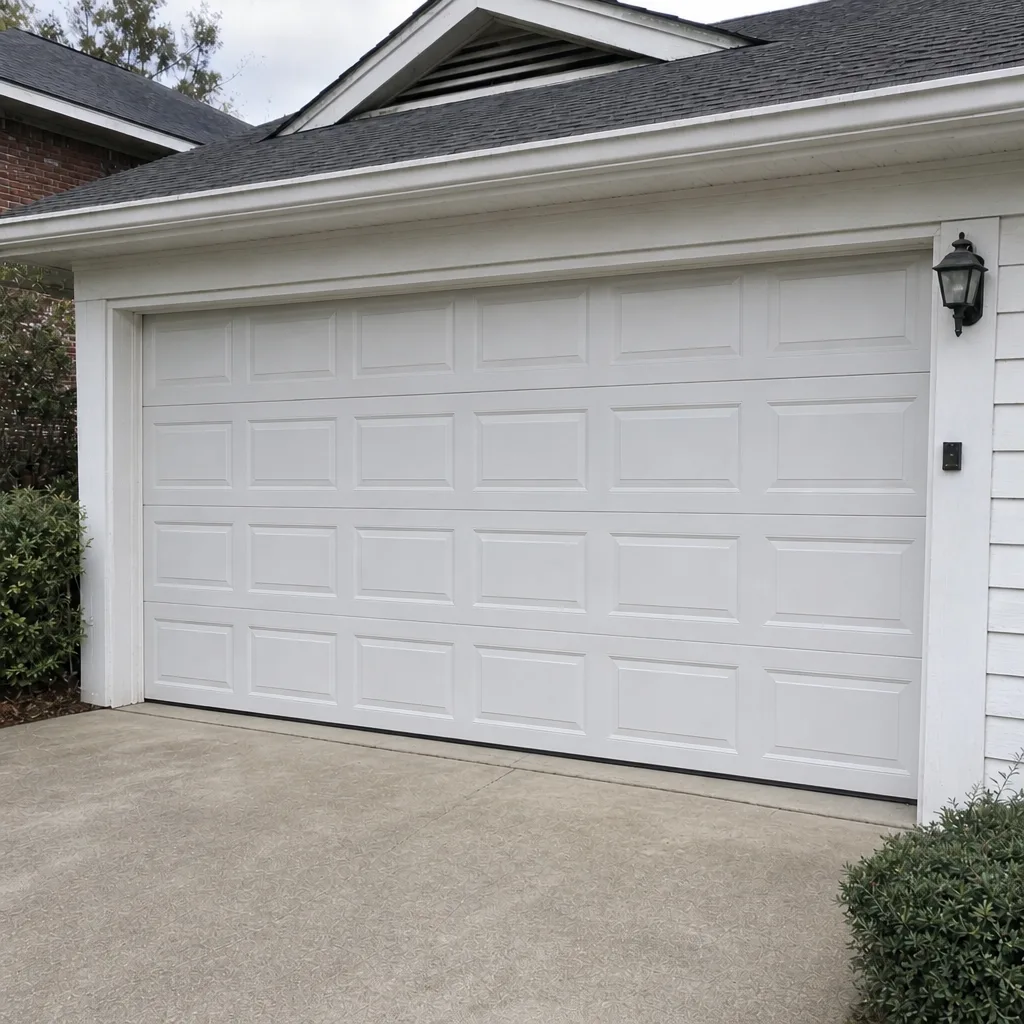 After
When to Call a Professional
Call a professional the moment you see a frayed cable, hear the loud pop of a broken spring, or find your door stuck halfway and off its tracks. Those are the stop-using-the-door-today signals, and they’re not jobs to attempt yourself. The same goes for a safety reverse that fails the monthly test. For the slower signals – grinding, rattling, a door that’s gotten stiff, an opener that hesitates – call when the issue is new or recurring, so it can be handled before it gets worse. South Fulton Garage Door Repair offers free estimates in South Fulton, so there’s no reason to put off a check. Call (855) 765-9962 for a free estimate, and we’ll help you sort out what’s a scheduled repair and what needs attention today.
Frequently Asked Questions
Spring repair pricing depends on the spring type, the door size, and whether the technician replaces one spring or a matched pair. Torsion springs are typically done as a pair, so expect that cost to reflect the pair rather than a single spring. Call (855) 765-9962 for an exact quote – estimates are free, and we’ll walk you through what’s involved before any work starts.
Emergency service is a core offering for us, not an upsell. A stuck door, a broken spring, or an opener that won’t run gets priority response. Call (855) 765-9962 and tell us what’s happening – the sound, the door’s behavior, and the brand of opener or door if you know it – and we’ll get you on the schedule as quickly as we can.
The written estimate we give you after inspection sets the price, and we agree on it before any work begins. That’s the number you pay. If we find something else during the inspection, we’ll show you and price it separately before touching it, so there are no surprises at the end.
The local professionals we connect you with are licensed and insured as their state requires. Our technicians have up to 14 years of experience working on the common brands homeowners here own, so you’re not getting a first-timer on your door.
We’re certified to service 8 of the industry’s most common brands, including LiftMaster, Chamberlain, Genie, Clopay, Amarr, Wayne Dalton, Craftsman, and Raynor. If you own one of those, you’re in good hands. Call (855) 765-9962 if you want to confirm before booking.
A broken spring, a frayed or snapped cable, a door stuck halfway that won’t move, a door that comes down unevenly or off its tracks, and a failed safety reverse all mean stop using the door and call for help. Everything else – grinding, rattling, a door that’s a little stiff – is usually a scheduled repair.
The Bottom Line
Warning signs are a language, and once you know how to read them, you can tell the difference between a squeak you can handle and a pop that means stop. Broken springs, broken or frayed cables, doors stuck off their tracks, and a failed safety reverse are the stop-and-call signals. Grinding, rattling, and a stiff door are the fix-it-soon signals. Describe the sound and the door’s behavior clearly when you call, and you’ll save time and avoid paying for repairs you don’t need. When you’re not sure, call and describe it. South Fulton Garage Door Repair handles repair, spring work, opener work, and new installation across the major brands, and we’re set up for emergencies when they happen. Call (855) 765-9962 for a free estimate, or visit us at South Fulton Garage Door Repair to see what we cover. If your door has been telling you something for a while, it’s worth a look at our garage door spring repair page before a small spring issue becomes a bigger one.
Written by the team at South Fulton Garage Door Repair.